
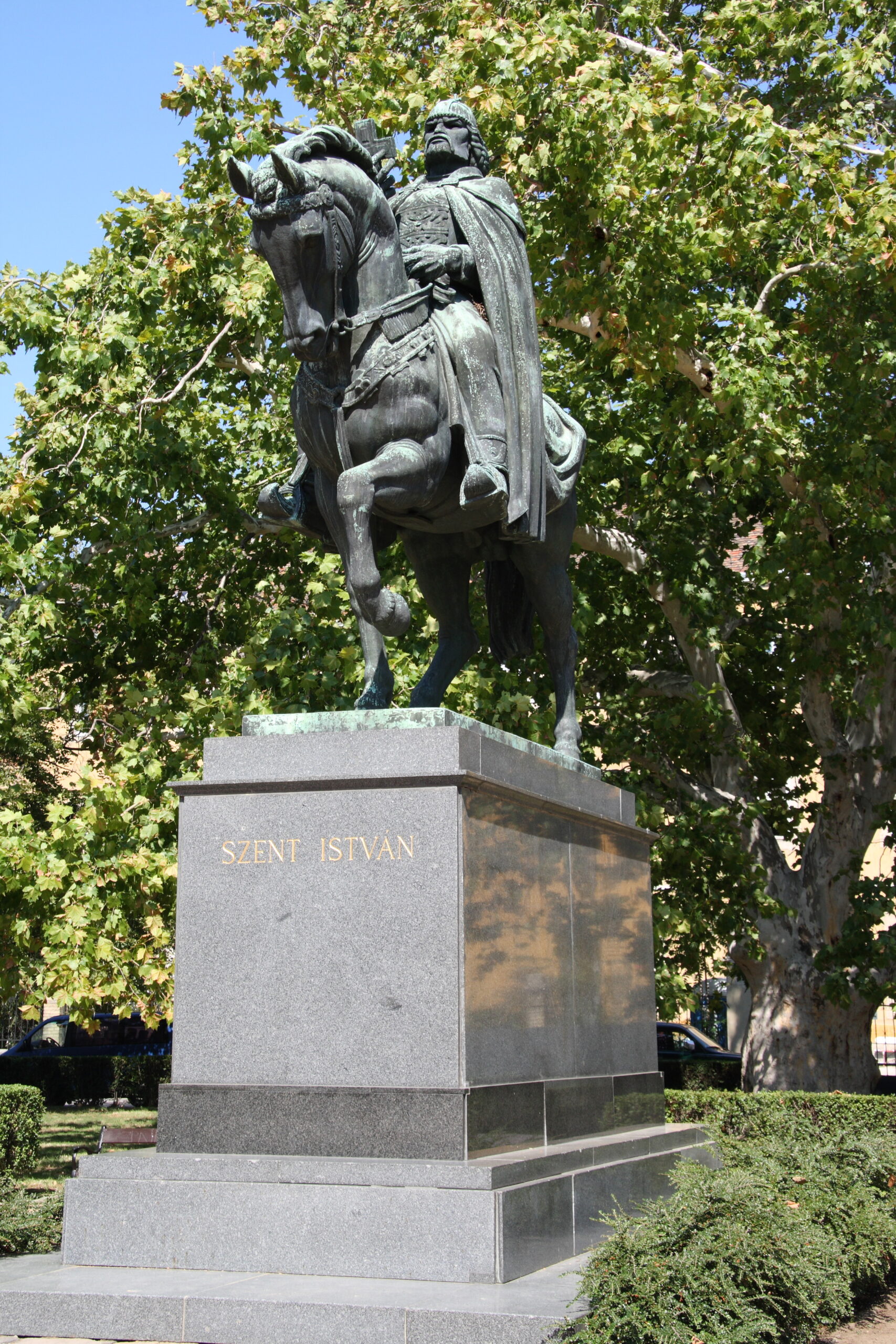
An important notice: The name “Istvan Kiraly” is associated with multiple notable individuals. This biography focuses on the most historically prominent figure, Saint Stephen I of Hungary, also known as Szent István király.
Brief Introduction of Istvan Kiraly
Istvan Kiraly, known in English as Stephen I, was the last Grand Prince of the Hungarians and the first King of Hungary, reigning from 1000 or 1001 until his death in 1038. Born as Vajk, he was a member of the Árpád dynasty. He is widely regarded as the founder of the Hungarian state and a pivotal figure in the country’s history for establishing Christianity as the state religion and organizing the kingdom along Western European lines. His reign marked Hungary’s entry into the family of European Christian nations, and he was canonized as a Catholic saint in 1083. His legacy is that of a nation-builder who laid the foundations for a stable and enduring Hungarian kingdom in the Carpathian Basin.

Istvan Kiraly Overview
| Full Name | Stephen I (born Vajk) |
| Date of Birth | c. 975 |
| Age | Died at approximately 63 years old |
| Birthplace | Esztergom, Principality of Hungary |
| Nationality | Hungarian |
| Profession | King of Hungary |
| Famous For | Being the first King of Hungary and establishing the Christian Hungarian state. |
| Education | Reared as a Christian under the tutelage of Christian missionaries, including Saint Adalbert of Prague. |
| Marital Status | Married |
| Spouse / Partner | Gisela of Bavaria |
| Children | Saint Emeric, Otto, and other children who did not survive to adulthood. |
| Net Worth | Not applicable for a historical figure of this era. |
Early Life and Education of Istvan Kiraly
Istvan Kiraly was born around 975 with the pagan name Vajk. He was the son of Géza, the Grand Prince of the Hungarians, and his wife Sarolt. His birthplace is believed to be Esztergom. His father, Géza, recognized the political necessity of aligning with Christian Europe and invited Catholic missionaries to their lands. Consequently, Vajk was baptized and given the Christian name Stephen (István in Hungarian). His education was deeply rooted in Christian teachings, with notable figures like Saint Adalbert of Prague playing a role in his upbringing. This education prepared him for his future role in transforming Hungary into a Christian kingdom. In a strategic move to strengthen ties with the West, a marriage was arranged for him with Gisela, a princess of Bavaria and sister of the future Holy Roman Emperor Henry II, whom he married around 995.
Istvan Kiraly Career
Early Career
Upon the death of his father in 997, Stephen’s claim to leadership was challenged by his relative, Koppány, who sought to rule based on ancient Hungarian pagan customs of seniority. Koppány, who was supported by pagan warriors, led an uprising against Stephen. With the help of foreign knights, including those who had arrived with his wife Gisela, Stephen confronted and defeated Koppány’s forces near Veszprém in 998. Following his victory, Koppány’s body was quartered and displayed on the walls of major castles to deter further pagan resistance, a decisive act that consolidated Stephen’s power and signaled his commitment to a new Christian order.
Breakthrough
The major turning point in Stephen’s career came on Christmas Day of 1000 or January 1, 1001, when he was crowned the first King of Hungary. According to tradition, he received a crown from Pope Sylvester II, an act that symbolized Hungary’s acceptance into the fold of Christian European monarchies and granted him internationally recognized legitimacy. This coronation marked the formal establishment of the Kingdom of Hungary, transforming the tribal federation of the Magyars into a centralized, Christian state modeled after other European kingdoms. This event was not merely a personal achievement for Stephen but a foundational moment for the Hungarian nation, shifting its political and cultural trajectory permanently towards Western Europe.
Major Achievements and Success
Throughout his long reign, which lasted until 1038, King Stephen implemented a series of profound reforms that shaped the future of Hungary. He was instrumental in establishing the Hungarian church, founding at least one archbishopric, six bishoprics, and three Benedictine monasteries, which allowed the church in Hungary to develop independently. He enforced the adoption of Christianity through strict laws, including mandatory church building and the introduction of tithing. Administratively, he replaced the old tribal system with a network of counties organized around fortresses and administered by royal officials. He also promoted agriculture, protected private property with strong laws, and established a standing army. His efforts unified the Carpathian Basin under his rule, successfully defending his kingdom’s independence against threats, notably from the Holy Roman Emperor Conrad II in 1030.
Recent Work / Current Status
As a historical figure who died in 1038, Istvan Kiraly’s “current status” is his enduring legacy. He passed away on August 15, 1038, and was buried in the basilica he had built in Székesfehérvár. Following his death, a period of internal conflict ensued in Hungary. However, his historical and religious significance only grew over time. He was canonized as a saint by the Roman Catholic Church in 1083, along with his son Emeric. Today, Saint Stephen is revered as the patron saint of Hungary, and his feast day, August 20th, is a major national holiday celebrating the foundation of the Hungarian state. His crown and other royal regalia remain powerful national symbols of Hungary.
Istvan Kiraly Awards and Achievements
- Canonized as a saint by the Roman Catholic Church in 1083.
- Established the Kingdom of Hungary, transforming it into a Christian state.
- Organized the Hungarian church with archbishoprics and bishoprics, securing its independence.
- Created a system of local administration based on counties, which formed the basis of Hungarian governance for centuries.
- Successfully defended Hungary’s sovereignty against foreign powers.
Istvan Kiraly Personal Life & Family
Istvan Kiraly’s personal life was intrinsically linked to his political and religious ambitions for Hungary. His marriage to Gisela of Bavaria around 995 was a crucial political alliance that secured him the support of powerful German knights in his struggle for the throne. Gisela was a devout Christian and played a significant role in the establishment of the church in Hungary. Their union produced several children, though most are believed to have died in infancy. Their most well-known son was Emeric (Imre in Hungarian), who was raised to be a pious Christian ruler. However, Emeric tragically died in a hunting accident in 1031, which created a succession crisis as Stephen had no other surviving sons to inherit the throne. This personal tragedy had significant political ramifications for the future of the kingdom he had built.

Istvan Kiraly Relationship Details
Istvan Kiraly was married to Gisela of Bavaria. Their marriage was a strategic dynastic union that played a vital role in Stephen’s rise to power and the Christianization of Hungary. Gisela was the daughter of Duke Henry II of Bavaria and the sister of Henry II, who would become the Holy Roman Emperor. This connection provided Stephen with essential military and political support from the West. They were married around 995, and their partnership lasted until Stephen’s death in 1038. Gisela was an active participant in the religious life of the kingdom and is associated with the founding of several churches. Together, they had children, including the venerated Saint Emeric.
Istvan Kiraly Net Worth and Income
The concept of personal net worth and income as understood today is not applicable to a monarch from the 11th century. As the King of Hungary, Istvan Kiraly controlled the wealth of the entire kingdom. His “income” would have been derived from royal lands, taxes, tithes, and customs duties. He became an extremely wealthy ruler through his reorganization of the territories under his control, which made Hungary commercially competitive with neighboring powers. The wealth he commanded was not for personal enrichment in the modern sense but was used to fund the state, the army, the construction of churches and monasteries, and to maintain the royal court. His power was based on land ownership and the allegiance of his subjects, rather than liquid financial assets.
Istvan Kiraly Physical Appearance
- Height: Information not disclosed
- Weight: Information not disclosed
- Eye Color: Information not disclosed
- Hair Color: Information not disclosed
Istvan Kiraly Controversies
While Saint Stephen is revered as a national founder and saint, his consolidation of power and the Christianization of Hungary were not without conflict and violence. The establishment of his rule involved a civil war against his pagan relative, Koppány, which culminated in Koppány’s brutal execution and dismemberment as a public warning. The transition to Christianity was enforced through strict and punitive laws. According to his own law code, those who ignored Christian customs or murmured during mass could face punishments like whipping and having their hair cut off. The historical record indicates that the mass conversion of the Hungarian people occurred under duress. These actions, while arguably necessary for the creation of a unified and stable state in the context of the era, represent a more controversial aspect of his reign when viewed through a modern lens.
Istvan Kiraly Social Media Presence
- Instagram – Not applicable
- Twitter – Not applicable
- YouTube – Not applicable
Interesting Facts about Istvan Kiraly
- His birth name was Vajk, which is derived from a Turkic word for “hero” or “master.” He was given the name Stephen upon his baptism.
- He is the subject of one of Hungary’s most popular rock operas, “István, a király” (“Stephen, the King”), which was first staged in 1983.
- A Hungarian opera titled “István király” was also composed by Ferenc Erkel in 1885.
- The Holy Crown of Hungary, also known as the Crown of Saint Stephen, is one of the most significant national symbols of the country, traditionally believed to have been sent by Pope Sylvester II for his coronation.
- He outlived both of his sons, which led to a period of instability and civil war after his death.
Istvan Kiraly Legacy and Influence
The legacy and influence of Istvan Kiraly on Hungary are immeasurable. His most significant achievement was the establishment of a stable, independent Christian kingdom in the Carpathian Basin, which ensured the survival of the Magyar people in a region surrounded by powerful empires. By aligning Hungary with Western Christendom, he prevented it from being absorbed by either the Byzantine Empire or the Holy Roman Empire. The administrative and religious institutions he founded provided the framework for the Hungarian state for centuries to come. The county system he created and the ecclesiastical structure he established were cornerstones of medieval Hungarian society. Stephen’s vision transformed a nomadic tribal confederation into a sedentary, European nation, laying the groundwork for its future cultural and political development. He remains a central figure in the Hungarian national identity, symbolizing sovereignty, Christian faith, and the nation’s enduring place in Europe.
Final Words about Istvan Kiraly
Saint Stephen I, or Istvan Kiraly, stands as the preeminent figure in the foundation of the Hungarian nation. His life journey from the pagan-born Vajk to the canonized Christian king represents a critical turning point in history. Through a combination of military prowess, political acumen, and unwavering religious conviction, he overcame internal opposition to forge a unified kingdom. His reign was characterized by sweeping reforms that fundamentally restructured Hungarian society, law, and religion, aligning the nation with the rest of Christian Europe. While the methods used to achieve this transformation were at times harsh, the result was the creation of a durable state that has persisted for over a thousand years. The legacy of Istvan Kiraly is not just that of a conqueror or a ruler, but of a visionary state-builder whose work continues to be celebrated as the birth of Hungary.