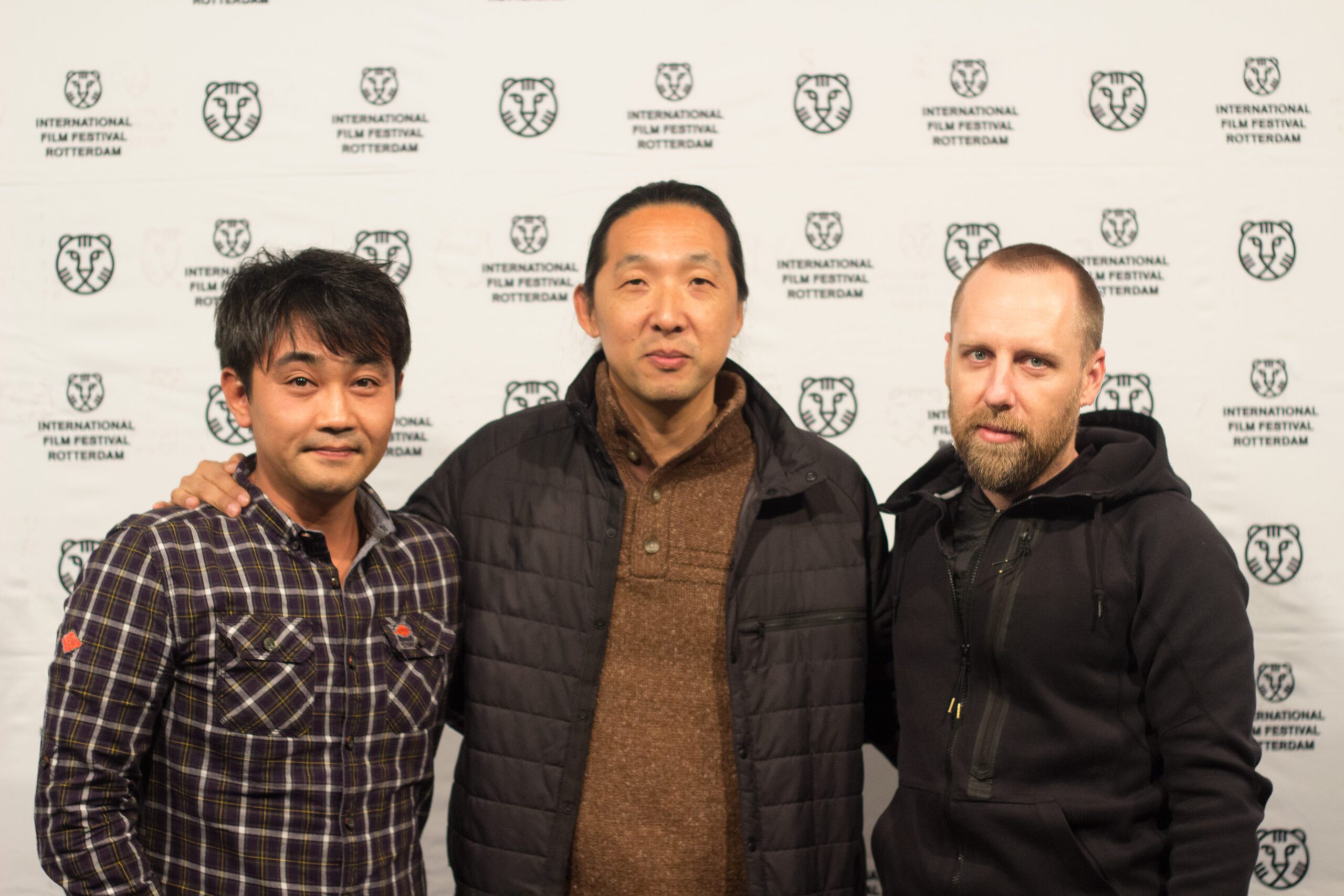
Brief Introduction of Kogonada
Kogonada is a South Korean-born American filmmaker, writer, and editor who has garnered international acclaim for his contemplative and visually meticulous cinematic style. He first gained prominence as a video essayist, creating insightful and analytical visual critiques of the works of renowned directors for platforms like The Criterion Collection and Sight & Sound. His transition to narrative filmmaking has been marked by a focus on themes of connection, intimacy, modernism, and the human condition. Kogonada’s feature films, including the critically lauded “Columbus” (2017) and “After Yang” (2021), are celebrated for their gentle pacing, profound emotional depth, and striking architectural compositions. Known for his an enigmatic public persona, he has established himself as a significant and thoughtful voice in contemporary independent cinema.

Kogonada Overview
| Full Name | Park Joong Eun |
| Date of Birth | Information not disclosed (born in the 1970s) |
| Age(as of 2025) | Likely in his 50s |
| Birthplace | Seoul, South Korea |
| Profession | Filmmaker, Video Essayist, Writer, Editor |
| Husband/Wife | Eleanor |
| Family | Two sons |
| Relationship/Affairs(GF/BF) | Married |
| Net Worth | Not publicly available |
Early Life and Education of Kogonada
Kogonada was born Park Joong Eun in Seoul, South Korea. He immigrated to the United States with his family as a young child and was raised in the Midwest, primarily in Indiana and Chicago. This upbringing in the American heartland would later profoundly influence the setting and sensibility of his debut feature film, “Columbus”. His father, whom Kogonada has described as immensely creative, instilled in him an appreciation for form and aesthetics from an early age, often pointing out the artistic qualities in natural objects like rocks and branches. This early education in seeing the world through a formal lens laid the groundwork for his later work in film analysis and filmmaking.
Before embarking on his filmmaking career, Kogonada pursued academia. He was a Ph.D. candidate in film studies, with a particular focus on the work of the legendary Japanese director Yasujirō Ozu. However, he found the traditional academic idiom restrictive and eventually abandoned his dissertation to begin creating visual works. This shift from theoretical analysis to practical application allowed him to explore cinematic language in a more direct and expressive manner. His academic background, however, remains a cornerstone of his artistic identity, providing a deep well of knowledge and a critical framework that informs his meticulous and thoughtful approach to cinema.
Kogonada’s Career
Kogonada’s career began not on a film set, but in the digital realm of the video essay. In the early 2010s, he started creating and publishing short visual analyses of films and filmmakers under his chosen pseudonym. His first video essay, “Breaking Bad // POV,” was posted in January 2012 and showcased the television series’ distinctive use of point-of-view shots. His work quickly gained recognition for its intelligence, elegance, and incisive ability to deconstruct a director’s style. He received commissions from prestigious film institutions such as the British Film Institute’s Sight & Sound magazine and The Criterion Collection. His video essays on directors like Stanley Kubrick, Wes Anderson, Robert Bresson, and Yasujirō Ozu became highly influential in online film communities, legitimizing the video essay as a serious form of film criticism.
The transition from critic to creator culminated in his feature film debut, “Columbus” (2017). The film, starring John Cho and Haley Lu Richardson, is set in the architectural mecca of Columbus, Indiana. It explores the burgeoning connection between a man visiting his estranged, comatose father and a young woman passionate about the town’s modernist buildings. The film premiered at the Sundance Film Festival to widespread critical acclaim, lauded for its poignant performances, stunning cinematography, and meditative exploration of grief, responsibility, and the solace found in art. “Columbus” established Kogonada as a filmmaker with a fully-formed and distinctive voice, one who prioritizes stillness, emotional nuance, and the interplay between characters and their environment.
His sophomore feature, “After Yang” (2021), starring Colin Farrell and Jodie Turner-Smith, further solidified his reputation as a master of gentle, humanistic science fiction. Based on a short story, the film follows a family’s journey to repair their unresponsive android son, using his memory bank as a way to reconnect with him and each other. Premiering at the Cannes Film Festival, “After Yang” was praised for its profound themes of memory, identity, and what it means to be human in a technologically saturated world. Kogonada has also expanded his work into television, directing episodes for the critically acclaimed Apple TV+ series “Pachinko” (2022) and the Star Wars series “The Acolyte” (2024). His next feature film, “A Big Bold Beautiful Journey,” starring Margot Robbie and Colin Farrell, was released in 2025.
Kogonada Personal Life & Family
Kogonada is known for being a very private individual, preferring to let his work speak for itself rather than discussing his personal life in great detail. He resides in Nashville, Tennessee, with his wife, Eleanor, and their two sons. In interviews, he has mentioned that his family and his experiences as a father have a significant influence on his work, particularly in his exploration of familial connections and disconnections. The challenges and vulnerabilities of parenthood are thematic undercurrents in his films, most notably in “After Yang.”
His chosen pseudonym, Kogonada, is a tribute to Kogo Noda, the frequent screenwriter of his cinematic idol, Yasujirō Ozu. This choice reflects not only his deep admiration for Ozu’s work but also a desire to separate his personal identity from his artistic persona. He has explained that using a pseudonym feels empowering as an Asian-American immigrant, offering a way to name himself in a new cultural context. Kogonada has also spoken about his identity as a first-generation Korean-American and how the experience of navigating different cultures has shaped his perspective and is reflected in the themes of identity and belonging in his films.

Awards and Achievements of Kogonada
- Nomination for the Alfred P. Sloan Feature Film Prize at the Sundance Film Festival for “After Yang” (2022)
- Nomination for the Un Certain Regard Award at the Cannes Film Festival for “After Yang” (2021)
- Nomination for the Independent Spirit Award for Best First Feature for “Columbus” (2017)
- Nomination for the Gotham Independent Film Award for Breakthrough Director for “Columbus” (2017)
- Nomination for the Independent Spirit Award for Best First Screenplay for “Columbus” (2017)
Kogonada Net Worth and Income
Information regarding Kogonada’s net worth and specific income sources is not publicly available. As an independent filmmaker, his income is likely derived from a combination of directing fees, writing credits, and producer roles on his various film and television projects. He has also received commissions for his video essay work from prominent organizations like The Criterion Collection and the British Film Institute. He has spoken about growing up in a working-class family and the ongoing challenge of balancing artistic integrity with the financial realities of supporting a family in a capitalist society.
Legacy and Influence
Kogonada’s legacy is twofold: he is a pioneer who elevated the video essay into a recognized form of cinematic analysis, and he is a filmmaker celebrated for his quiet, humanistic, and aesthetically refined storytelling. As a video essayist, he demonstrated a profound understanding of film language, influencing a generation of online film critics and creators to engage with cinema on a deeper, more formal level. His work in this area is characterized by its meticulous editing and insightful juxtapositions, revealing the subtle artistry of the directors he examines.
As a feature filmmaker, Kogonada’s influence lies in his commitment to a contemplative and emotionally resonant style that stands in contrast to the fast-paced, plot-driven nature of much of contemporary cinema. His films are often described as “gentle” and “meditative,” yet they tackle profound themes of loss, identity, and the search for connection in the modern world. His emphasis on the relationship between architecture, space, and human emotion has created a unique cinematic signature. By championing a quieter, more observant mode of filmmaking, Kogonada has carved out a distinct and respected place for himself in the landscape of independent film, inspiring audiences and fellow filmmakers to appreciate the beauty and emotional power of stillness.
Interesting Facts about Kogonada
- His pseudonym is a tribute to Kogo Noda, the long-time screenwriter for his favorite director, Yasujirō Ozu.
- He was a Ph.D. candidate in film studies before he started his filmmaking career, and his dissertation was focused on Ozu.
- He has compared the art of creating his video essays to the craft of making sushi, where every selection and every cut matters.
- He is an avid believer in the power of physical media and has created several video essays for The Criterion Collection’s Blu-ray releases.
- The architectural landscape of Columbus, Indiana, the setting for his first film, was a place he discovered through a newspaper article and felt compelled to visit, which then inspired the entire movie.
Controversies
There are no known public controversies associated with Kogonada. He maintains a private life and his public persona is focused entirely on his work and artistic process.
Social Media Presence
- Instagram – Not publicly available
- Twitter – Kogonada has an official Twitter account, though follower counts are not readily available.
- YouTube – Kogonada does not have an official, active YouTube channel for his video essays; they are primarily hosted on Vimeo and through the platforms that commissioned them.
Final Words about Kogonada
Kogonada continues to be one of the most distinctive and thoughtful filmmakers working today. His journey from an academic and video essayist to a critically acclaimed director is a testament to his deep-seated love and understanding of the cinematic art form. With each project, he reaffirms his commitment to a cinema of quiet observation, emotional depth, and aesthetic precision. Whether exploring the modernist architecture of the American Midwest or the speculative future of artificial intelligence, his focus remains steadfastly on the universal human longing for connection. As he continues to create, both in independent film and on a larger canvas with studio projects, the film world watches with anticipation for the next chapter in the career of this singular and important artist, a filmmaker who consistently reminds us of the profound beauty that can be found in the quiet spaces of our lives.