
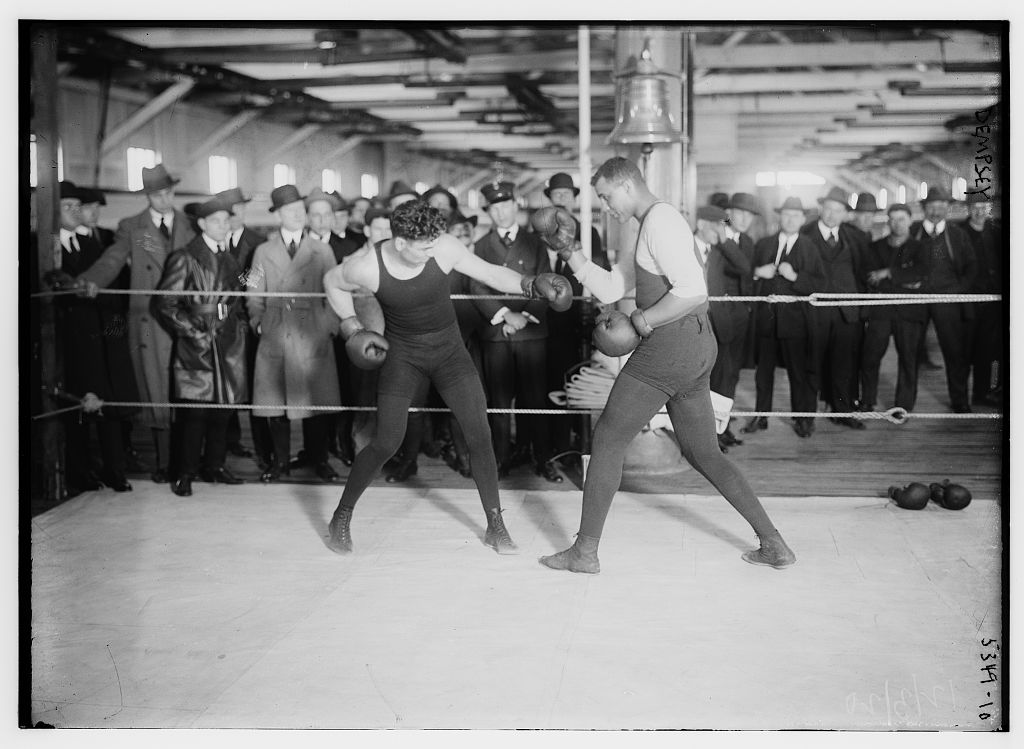
Brief Introduction of Jack Dempsey
William Harrison “Jack” Dempsey, famously known as “The Manassa Mauler,” was an American professional boxer who became one of the most iconic sports figures of the 20th century. He held the world heavyweight championship from 1919 to 1926, a reign that coincided with the Roaring Twenties and helped elevate boxing into a premier spectator sport. Dempsey’s aggressive, brawling fighting style and devastating punching power captivated audiences and set numerous financial and attendance records, including the first million-dollar gate. His rise from a poor, transient life to global stardom embodied the American dream, making the Jack Dempsey biography a compelling story of resilience and determination. Outside the ring, he was known for his kindness and generosity, a stark contrast to his ferocious persona, which secured his place as a beloved cultural icon.

Jack Dempsey Overview
| Full Name | William Harrison Dempsey |
| Date of Birth | June 24, 1895 |
| Age(as of 2025) | Would have been 130 years old |
| Birthplace | Manassa, Colorado, U.S. |
| Profession | Professional Boxer, Restaurateur, Author |
| Husband/Wife | Maxine Gates (m. 1916–1919), Estelle Taylor (m. 1925–1930), Hannah Williams (m. 1933–1943), Deanna Piatelli (m. 1958–1983) |
| Family | Parents: Hiram and Mary Celia Dempsey. He was one of eleven children. He had two daughters with Hannah Williams, Joan and Barbara, and adopted a daughter with Deanna Piatelli. |
| Relationship/Affairs(GF/BF) | Information not disclosed. |
| Net Worth | His career earnings were estimated at over $3.5 million, a significant fortune for his era. |
Early Life and Education of Jack Dempsey
William Harrison Dempsey was born on June 24, 1895, in Manassa, Colorado, to a poor family of Mormon converts, Hyrum and Mary Celia Dempsey. He was the ninth of eleven children and grew up in a household that frequently moved between Colorado, West Virginia, and Utah as his father struggled to find steady work. This nomadic and impoverished upbringing shaped his tough and resilient character. From a young age, Dempsey was no stranger to hardship, taking on jobs as a farmhand, miner, and cowboy to help support his family. His formal education was limited; he dropped out of school after the eighth grade to work full-time. It was during these formative years that he learned to fight, initially taught by his older brother Bernie. To toughen himself up, he followed his brother’s advice to chew pine tar gum to strengthen his jaw and soak his face in beef brine to harden his skin. Desperate for money, the young Dempsey would often enter saloons and challenge patrons, famously saying, “I can’t sing and I can’t dance, but I can lick any SOB in the house.” These rough, bare-knuckle brawls in mining towns and hobo camps were his first taste of prizefighting.
Jack Dempsey’s Career
Jack Dempsey’s professional boxing career began around 1914, initially fighting under the pseudonyms “Kid Blackie” and “Young Dempsey”. He adopted the name “Jack Dempsey” from his older brother, who had boxed under the name inspired by middleweight champion Jack “Nonpareil” Dempsey. For years, he was an itinerant fighter, riding the rails to find matches in saloons and mining camps across the West. His career took a significant turn after partnering with manager Jack “Doc” Kearns, who skillfully guided his path to the top. Dempsey’s aggressive, bobbing-and-weaving style, later dubbed the “Dempsey Roll,” was revolutionary. He fought with a ferocity that overwhelmed opponents, leading to a string of knockouts.
The defining moment of his early career came on July 4, 1919, when he challenged the colossal heavyweight champion Jess Willard. Despite being significantly smaller, Dempsey delivered a brutal beating, knocking Willard down seven times in the first round and fracturing his jaw and cheekbone, ultimately winning the world heavyweight title when Willard retired on his stool after the third round. As champion, Dempsey became a national hero and a massive box-office draw. His 1921 title defense against French war hero Georges Carpentier generated boxing’s first-ever million-dollar gate. Another legendary bout was his 1923 defense against Luis Ángel Firpo, a wild brawl where Dempsey was knocked out of the ring before recovering to win by knockout in the second round.
After a three-year hiatus from the ring, Dempsey lost his title to the strategic boxer Gene Tunney in a 10-round decision on September 23, 1926. The rematch in 1927 in Chicago became one of boxing’s most controversial fights, known as the “Battle of the Long Count.” In the seventh round, Dempsey knocked Tunney down but failed to go to a neutral corner immediately, a newly implemented rule. The referee delayed the count, giving Tunney precious extra seconds to recover and ultimately win the fight by another 10-round decision. After the second loss to Tunney, Dempsey retired from championship boxing, though he continued to fight in numerous exhibition bouts. His official record stands with various figures but is generally cited as having over 80 fights, with more than 60 wins and over 50 by knockout.
Jack Dempsey Personal Life & Family
Jack Dempsey’s life outside the ring was as eventful as his career inside it. He was married four times. His first marriage was to Maxine Gates from 1916 to 1919. He then married silent film actress Estelle Taylor in 1925, a union that lasted until their divorce in 1930. In 1933, he married Broadway singer Hannah Williams, with whom he had two daughters, Joan and Barbara; this marriage ended in divorce in 1943. His final and longest-lasting marriage was to Deanna Piatelli, whom he married in 1958 and remained with until his death in 1983. Together, they adopted a daughter, also named Barbara, who would later co-author his autobiography. Dempsey was the son of Hiram and Mary Celia Dempsey and grew up with ten siblings in a family that struggled with poverty. Despite his ferocious reputation in the ring, Dempsey was known in his personal life for his warmth, kindness, and generosity. After retiring from boxing, he became a successful and beloved restaurateur in New York City, opening Jack Dempsey’s Restaurant on Broadway, which he operated for nearly four decades. He was known for personally greeting customers and sharing stories. During World War II, he served in the Coast Guard as a commander and director of its physical fitness program. He remained a prominent and respected public figure until his death from heart failure on May 31, 1983, at the age of 87.

Awards and Achievements of Jack Dempsey
- World Heavyweight Champion (1919-1926).
- Inaugural winner of the Edward J. Neil Memorial Plaque from the Boxing Writers Association of America (1938).
- Voted as the greatest fighter of the past 50 years by the Associated Press (1950).
- Inducted into The Ring magazine’s Boxing Hall of Fame (1954).
- Inducted into the International Boxing Hall of Fame (Inaugural Class, 1990).
- Ranked among the top 10 all-time heavyweights and greatest punchers by The Ring magazine.
- Participated in boxing’s first million-dollar and two-million-dollar gates.
Jack Dempsey Net Worth and Income
Jack Dempsey was one of the highest-earning athletes of his era, pioneering the concept of the multi-million dollar prize fighter. His career earnings from fight purses alone were estimated to be over $3.5 million, an astronomical sum in the 1920s. His fights consistently broke financial records; his 1921 bout against Georges Carpentier was the first to generate a gate of over $1 million, and the 1927 rematch against Gene Tunney brought in a record $2.6 million. Beyond his boxing income, Dempsey was a savvy celebrity endorser and appeared in films and on Broadway. After his retirement, he achieved significant financial success as a restaurateur. He opened the famous Jack Dempsey’s Restaurant in New York City in 1935, which became a landmark institution for nearly 40 years, providing him with a steady and substantial income. This business acumen ensured he remained wealthy long after his fighting days were over, a rarity for boxers of his time.
Legacy and Influence
Jack Dempsey’s legacy extends far beyond his heavyweight title reign; he fundamentally changed the sport of boxing and became a towering figure in American culture. Along with Babe Ruth, he was one of the defining sports icons of the Roaring Twenties, an era of unprecedented celebrity and media growth. His aggressive, all-action fighting style—a stark contrast to the more defensive, scientific boxing that preceded him—made the sport thrilling and accessible to a mass audience. He transformed boxing into a major commercial enterprise, with his fights becoming huge spectator events that generated the sport’s first million-dollar gates and were broadcast live on the radio, reaching millions. Dempsey’s rags-to-riches story, from a hobo riding the rails to a world champion, captured the public’s imagination and embodied the American spirit of rugged individualism. He was one of the first athletes to achieve true superstar status, mingling with Hollywood stars and becoming a cultural icon whose fame transcended sports. The rule requiring a fighter to go to a neutral corner after a knockdown was implemented in part due to his famous “Long Count” fight, a lasting change to the sport’s regulations.
Interesting Facts about Jack Dempsey
- Before becoming famous, Dempsey fought in saloons for money and often used the nickname “Kid Blackie.”
- His famous quote after losing his title to Gene Tunney was delivered to his wife: “Honey, I forgot to duck.” This line was later borrowed by President Ronald Reagan after an assassination attempt.
- He was taught to fight by his older brother Bernie, who instructed him to chew pine tar gum and wash his face in beef brine to toughen his skin and jaw.
- During World War II, he served as a lieutenant commander in the U.S. Coast Guard, directing their physical fitness program.
- His restaurant in New York City was a popular celebrity hangout for nearly 40 years.
- He is credited with helping to popularize live radio broadcasts of sporting events.
- Despite their fierce rivalry in the ring, Dempsey later became good friends with his opponent Gene Tunney.
Controversies
Jack Dempsey’s career was not without controversy. Early on, he faced accusations of being a “slacker” for not enlisting to fight in World War I. He worked in a shipyard, and a widely circulated photo of him in patent-leather shoes, supposedly at work, damaged his reputation. Though evidence later showed he had registered for the draft and was exempted due to having a dependent wife, the “slacker” label lingered for years until he served honorably in the Coast Guard during World War II. Another significant controversy was the “Long Count” in his 1927 rematch with Gene Tunney. When Dempsey knocked Tunney down, he failed to adhere to a new rule requiring him to go to a neutral corner immediately. The referee’s delay in starting the count gave Tunney several extra seconds to recover, a moment that fans have debated for decades, with many believing Dempsey was robbed of a knockout victory. Additionally, after his brutal 1919 victory over Jess Willard, Willard’s camp alleged that Dempsey’s gloves were “loaded,” possibly with plaster of Paris, an accusation that has been a subject of speculation but has never been proven. He also faced criticism for not fighting top Black contenders, most notably Harry Wills, during his championship reign.
Social Media Presence
- Instagram – Not applicable
- Twitter – Not applicable
- YouTube – Not applicable
Final Words about Jack Dempsey
Jack Dempsey remains one of the most important and transformative figures in boxing history. His journey from poverty in the American West to global superstardom is a legendary tale of grit and determination. As the “Manassa Mauler,” he didn’t just win fights; he created spectacles that turned boxing into a mainstream phenomenon and a multi-million dollar business. His ferocious style inside the ropes was perfectly balanced by a gentle, kind demeanor outside of them, endearing him to millions. Even after his retirement, he stayed in the public eye as a successful restaurateur and beloved elder statesman of the sport. The impact of Jack Dempsey’s wiki is not just in his impressive record but in how he revolutionized boxing’s popularity and created the blueprint for the modern athlete-celebrity. His legacy is cemented not only in the record books and halls of fame but in the very fabric of 20th-century American sports culture.