
Brief Introduction of Emmanuel Macron
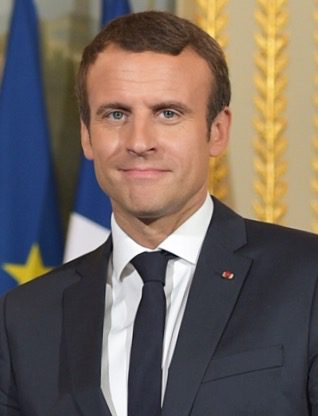
Emmanuel Jean-Michel Frédéric Macron is a French politician who has been serving as the President of France since 2017. Before his presidency, he had a distinguished career in both the civil service and investment banking. He served as Deputy Secretary-General at the Élysée under President François Hollande and later as Minister of Economy, Industry and Digital Affairs. In 2016, he founded his own political party, En Marche!, a centrist and pro-European movement, and successfully ran for president the following year. At 39, he became the youngest president in French history. Macron was re-elected for a second term in 2022, becoming the first French president in two decades to win a second term. His presidency has been marked by significant economic reforms, a strong pro-European Union stance, and navigating various domestic and international challenges.
Emmanuel Macron Overview
| Full Name | Emmanuel Jean-Michel Frédéric Macron |
| Date of Birth | December 21, 1977 |
| Age(as of 2025) | 48 |
| Birthplace | Amiens, France |
| Profession | Politician, Former Investment Banker |
| Husband/Wife | Brigitte Macron (née Trogneux) |
| Family | Jean-Michel Macron (Father), Françoise Noguès (Mother), Laurent Macron (Brother), Estelle Macron (Sister) |
| Relationship/Affairs(GF/BF) | Married |
| Net Worth | Estimated between $1 million and $50 million |
Early Life and Education of Emmanuel Macron
Emmanuel Macron was born on December 21, 1977, in Amiens, France, to Jean-Michel Macron, a professor of neurology, and Françoise Noguès, a physician. He is the eldest of three children. Macron was a precocious student, excelling in his studies from a young age. He attended the Jesuit school Lycée la Providence in Amiens. It was during his time there that he met his future wife, Brigitte Auzière (née Trogneux), his drama teacher, who was 24 years his senior. This relationship caused concern for his parents, who sent him to Paris to complete his final year of high school at the prestigious Lycée Henri-IV. He went on to study philosophy at the University of Paris-Ouest Nanterre La Défense, obtaining a DEA degree. Around 1999, he worked as an editorial assistant to the philosopher Paul Ricœur. Macron also earned a master’s degree in public affairs from the prestigious Sciences Po and later graduated from the École Nationale d’Administration (ENA) in 2004, a key institution for training France’s top civil servants.
Emmanuel Macron’s Career
After graduating from ENA in 2004, Emmanuel Macron began his career as a finance inspector in the French Ministry of Economy. In 2008, he transitioned to the private sector, joining Rothschild & Cie Banque as an investment banker. He quickly rose through the ranks, becoming a managing partner. A notable achievement during this period was his role in advising Nestlé’s $12 billion acquisition of a division of Pfizer. His success in the financial world reportedly earned him a significant income.
Macron’s political career began to take shape when he started advising François Hollande during his 2012 presidential campaign. After Hollande’s victory, Macron was appointed Deputy Secretary-General of the Élysée, a senior advisory role. In 2014, he was appointed Minister of Economy, Industry and Digital Affairs in the second Valls government. During his tenure, he championed a package of business-friendly reforms known as the “loi Macron” (Macron law), which aimed to liberalize the French economy. This move, however, faced strong opposition from the left wing of the Socialist Party.
In April 2016, feeling constrained within the Socialist Party, Macron founded his own political movement, En Marche!, which he positioned as a centrist, progressive, and pro-European force that was “neither right nor left”. He resigned from his ministerial post in August 2016 to focus on his new political project. In November of that year, he officially declared his candidacy for the 2017 presidential election. Capitalizing on public disillusionment with the traditional political parties, Macron’s campaign gained momentum. He won the first round of the election and went on to defeat the far-right candidate Marine Le Pen in the second round with 66.1% of the vote, becoming, at 39, the youngest president in French history.
As president, Macron has overseen a range of reforms to labor laws, taxation, and pensions. He has also been a vocal advocate for a stronger and more integrated European Union. His first term was marked by the “gilets jaunes” (yellow vests) protests, a series of demonstrations against fuel tax hikes and the high cost of living. In 2022, Macron was re-elected for a second term, once again defeating Marine Le Pen. This victory made him the first French president to be re-elected in two decades. His second term has been characterized by ongoing challenges, including the implementation of controversial pension reforms that led to widespread strikes and protests.
Emmanuel Macron Personal Life & Family
Emmanuel Macron’s personal life has often been a subject of public interest, largely due to his marriage to Brigitte Macron. Brigitte is 24 years his senior, and the couple met when he was a 15-year-old student and she was his 39-year-old drama teacher at La Providence high school in Amiens. Despite his parents’ initial disapproval, which led them to send him to Paris to finish his schooling, their connection endured. They married on October 20, 2007, after Brigitte divorced her first husband, André-Louis Auzière, with whom she has three children: Sébastien, Laurence, and Tiphaine. Emmanuel Macron does not have any biological children but is a stepfather and grandfather to Brigitte’s grandchildren. The family maintains a private life, with their home, Villa Monéjan in Le Touquet, being a personal retreat. Raised in a non-religious family, Macron was baptized a Roman Catholic at his own request at the age of 12, but he now identifies as agnostic.

Awards and Achievements of Emmanuel Macron
- Grand Master & Grand Cross of the National Order of the Legion of Honour (2017)
- Grand Master & Grand Cross of the National Order of Merit (2017)
- Knight Grand Cross with Collar of the Order of Merit of the Italian Republic (2021)
- Grand Cross of the National Order of the Ivory Coast (2019)
- Grand Cordon of the Order of Leopold (Belgium, 2018)
- Grand Order of Mugunghwa (South Korea, 2018)
- Grand Cross of the Order of the White Rose with Collar (Finland, 2018)
- Knight of the Order of the Elephant (Denmark, 2018)
Emmanuel Macron Net Worth and Income
As of 2025, Emmanuel Macron’s net worth is a subject of some debate, with estimates varying significantly. Some sources place his net worth between $40 million and $50 million. This wealth is largely attributed to his successful career as an investment banker at Rothschild & Cie, where he was involved in major deals and reportedly earned millions. However, other reports, citing his official financial disclosures to the French government, suggest a much more modest net worth of around $1 million. His presidential salary is approximately €182,000 annually. The family’s assets also include a villa in Le Touquet, which is in his wife’s name.
Legacy and Influence
Emmanuel Macron’s presidency has had a significant impact on both French and European politics. His rise to power was seen as a disruption of the traditional left-right political divide in France. He has positioned himself as a staunch defender of the European Union, advocating for greater integration and cooperation among member states. Domestically, his economic reforms have been aimed at liberalizing the French economy and making it more competitive, though they have also drawn considerable criticism and led to widespread protests. He has been a prominent figure on the international stage, engaging in diplomacy on a range of global issues. His leadership style, which he once described as “Jupiterian,” suggests a more authoritative and distant approach to the presidency. Macron’s legacy will likely be defined by his efforts to reform France, his championing of the European project, and his navigation of a turbulent period in global politics.
Interesting Facts about Emmanuel Macron
- At the age of 39, he became the youngest president in the history of France.
- He is an accomplished pianist, having studied the instrument for ten years at the Amiens Conservatory.
- As President of France, he also serves as one of the two Co-Princes of Andorra.
- He is an avid fan of the Olympique de Marseille football club.
- Before entering politics, he worked as an editorial assistant for the renowned French philosopher Paul Ricœur.
- He and his wife, Brigitte, have a dog named Nemo, a Labrador Retriever-Griffon mix, who lives with them at the Élysée Palace.
Controversies
Emmanuel Macron’s presidency has not been without controversy. One of the most significant challenges was the “gilets jaunes” (yellow vests) movement, which began in late 2018 as a protest against a planned fuel tax increase but quickly evolved into a broader expression of anger over the cost of living and perceived economic inequality. His government’s pension reforms, which raised the retirement age, also sparked massive strikes and protests across the country. Another notable controversy was the “Benalla affair,” which involved one of his top security aides, Alexandre Benalla, who was filmed assaulting protesters during a May Day demonstration. The initial handling of the incident by the Élysée Palace drew criticism and accusations of a cover-up. More recently, his government has come under scrutiny over its use of consulting firms, particularly McKinsey & Company, with a criminal investigation launched into claims that the firm received government contracts in exchange for assistance with his election campaigns.
Social Media Presence
- Instagram – approximately 3 million followers
- Twitter – over 7.3 million followers
- YouTube – Information not publicly available
Final Words about Emmanuel Macron
Emmanuel Macron remains a central and often polarizing figure in French and international politics. As he navigates his second term as president, he continues to face significant domestic challenges, including social unrest and a fragmented parliament. His vision for France is one of a modernized and economically dynamic nation at the heart of a strong and integrated Europe. His supporters view him as a bold and necessary reformer, while his critics accuse him of being out of touch with the concerns of ordinary citizens. The coming years will be crucial in shaping his ultimate legacy and determining the long-term impact of his policies on France and the wider world. His future plans beyond his second term, which concludes in 2027, remain a subject of speculation.