
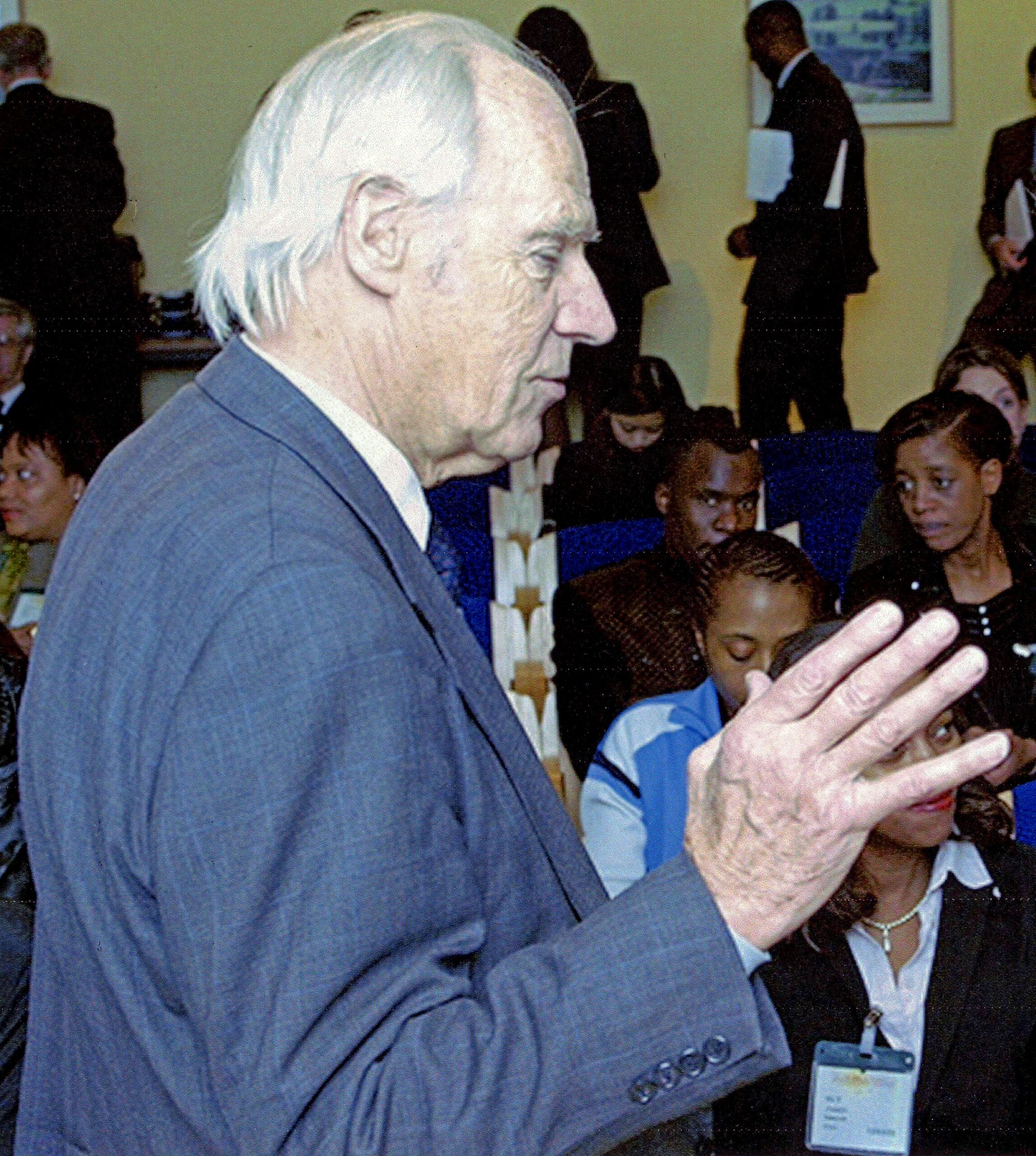
Brief Introduction of George Martin
Sir George Henry Martin was a legendary English record producer, arranger, composer, conductor, and musician, widely celebrated for his revolutionary work with The Beatles. Often referred to as the “Fifth Beatle,” his profound influence and classical training were instrumental in shaping the band’s innovative sound and global success. Martin’s career spanned over six decades, during which he produced a staggering 30 number-one hit singles in the United Kingdom and 23 in the United States. Beyond his iconic collaboration with The Beatles, he was a versatile talent who worked with a diverse range of artists, from comedians like Peter Sellers to musicians such as Jeff Beck and Celine Dion. His creative genius, willingness to experiment with studio technology, and ability to translate artists’ visions into groundbreaking recordings cemented his status as one of the most important and respected figures in the history of popular music.
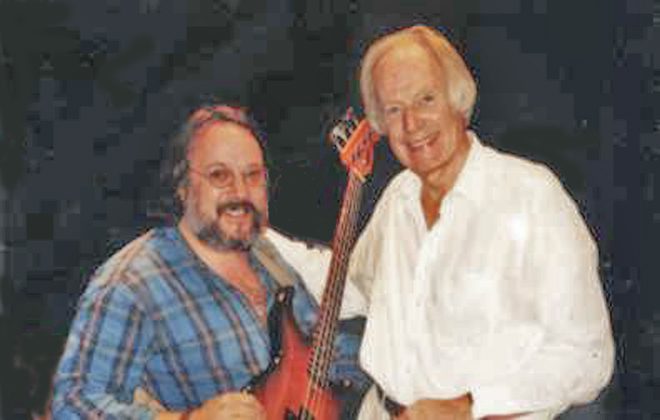
George Martin Overview
| Full Name | Sir George Henry Martin |
| Date of Birth | January 3, 1926 |
| Age(as of 2025) | Would have been 99 years old (Died March 8, 2016) |
| Birthplace | Highbury, London, England |
| Profession | Record Producer, Arranger, Composer, Conductor, Musician |
| Husband/Wife | Judy Lockhart-Smith (m. 1966–2016), Jean “Sheena” Chisholm (m. 1948–1965) |
| Family | Wife: Judy Martin; Children: Giles Martin, Lucie Martin, Alexis Martin, Gregory Paul Martin |
| Relationship/Affairs(GF/BF) | Information not publicly available |
| Net Worth | Estimated at $100 million at the time of his death in 2016. |
Early Life and Education of George Martin
George Henry Martin was born on January 3, 1926, in Highbury, London, into a working-class family. His father was a carpenter, and Martin grew up with humble beginnings, often recalling a childhood home without electricity or running water. His interest in music was sparked at the age of six when his family acquired a piano. Though he briefly took piano lessons at age eight, they were cut short due to a disagreement between his mother and the teacher, leading him to become largely self-taught. He possessed a natural gift for music, including perfect pitch, which allowed him to develop his skills independently. As a teenager, he formed his own band called George Martin and the Four Tune Tellers, which played at school dances. During World War II, Martin served in the Royal Navy’s Fleet Air Arm from 1943 to 1947, where he was a commissioned officer, though the war ended before he saw combat. After his military service, he used a veteran’s grant to formally pursue his musical education, enrolling at the prestigious Guildhall School of Music and Drama from 1947 to 1950. There, he studied piano and oboe, and took courses in composition and orchestration, immersing himself in the works of composers like Rachmaninoff and Ravel.
George Martin’s Career
After graduating from Guildhall, George Martin worked for the BBC’s classical music department before joining EMI in 1950 as an assistant to Oscar Preuss, the head of the Parlophone label. At the time, Parlophone was a small, overlooked imprint within the EMI empire, primarily releasing classical, jazz, and regional music. Martin quickly proved his worth, and in 1955, at the age of 29, he was appointed head of the label upon Preuss’s retirement. In this role, he diversified the label’s output, notably producing successful comedy and novelty records with artists like Peter Sellers, Spike Milligan, and Bernard Cribbins. This experience with sound effects and unconventional recordings would later prove invaluable.
His career, and the course of music history, changed forever in 1962. He was approached by Brian Epstein, the manager of a young band from Liverpool called The Beatles, who had been rejected by every other major label. While not immediately overwhelmed by their demo tape, Martin was impressed by their charisma and humor during an in-person audition. He signed them to Parlophone, a decision that initially required convincing EMI leadership. Martin’s classical training and openness to experimentation were the perfect match for the band’s raw talent and ambition. He became their producer for nearly all of their recordings, guiding their evolution from a straightforward rock and roll band into musical pioneers. Martin’s contributions were immense; he arranged the iconic string quartet on “Yesterday,” played the baroque piano solo on “In My Life,” and orchestrated the complex, psychedelic soundscapes of “Strawberry Fields Forever” and “A Day in the Life.” After one recording session, he famously told the band, “Gentlemen, you have just made your first number one record” about “Please Please Me.”
Frustrated with his salary and lack of royalties at EMI, Martin left in 1965 to form his own company, Associated Independent Recording (AIR), along with other leading producers. This move was revolutionary, establishing the model for the modern independent producer. He continued to produce The Beatles’ records as a freelance producer. After the band’s breakup, Martin had a prolific career working with a vast array of artists, including America, Jeff Beck, Cheap Trick, and Kenny Rogers. He also composed and arranged music for films, including the James Bond movie “Live and Let Die.” In 1979, he opened AIR Studios on the Caribbean island of Montserrat, which became a legendary recording destination for artists like The Police, Dire Straits, and The Rolling Stones until it was destroyed by a hurricane in 1989. He later re-established AIR Studios in a former church in London in 1992. His final major project involving The Beatles was in 2006, when he and his son Giles co-produced the soundtrack for the Cirque du Soleil show “Love,” which remixed and reimagined the band’s music and earned them two Grammy Awards.
George Martin Personal Life & Family
George Martin was married twice. His first marriage was to Jean “Sheena” Chisholm in 1948, with whom he had two children, Alexis and Gregory Paul Martin. The couple divorced in 1965. In 1966, he married Judy Lockhart-Smith, who had been his secretary at EMI. Their marriage lasted until his death in 2016. Together, they had two children, Lucie and Giles Martin. Giles followed in his father’s footsteps, becoming a successful and respected record producer in his own right, often collaborating with his father in his later years. Martin was known for his dapper appearance and “schoolteacherly” demeanor, a contrast to the rock and roll artists he often worked with. Despite his immense success, he maintained a relatively private life. In his later years, Martin experienced significant hearing loss, a consequence of decades in the recording studio. He relied on his son Giles to act as his “ears” during their collaborative projects. George Martin passed away peacefully in his sleep at his home in Wiltshire, England, on March 8, 2016, at the age of 90.
Awards and Achievements of George Martin
- Knighted by Queen Elizabeth II in 1996 for his services to the music industry and popular culture.
- Inducted into the Rock and Roll Hall of Fame in 1999.
- Winner of six Grammy Awards, including for his work on “Sgt. Pepper’s Lonely Hearts Club Band,” “The Who’s Tommy,” and The Beatles’ “Love” soundtrack.
- Recipient of two Ivor Novello Awards.
- BRIT Awards for Best British Producer (1977) and Outstanding Contribution to Music (1984).
- Named British Phonographic Industry’s ‘Man of the Year’ in 1998.
- Awarded an Honorary Doctorate in Music by Berklee College of Music in 1989.
- Received the James Joyce Award from the Literary and Historical Society of University College Dublin in 2008.
- Honored with a Gold Medal for Services to the Arts from CISAC.
- Granted his own Coat of Arms in 2004, which featured three beetles and the motto “Amore Solum Opus Est” (All You Need Is Love).
George Martin Net Worth and Income
At the time of his death in 2016, Sir George Martin’s net worth was estimated to be around $100 million. His wealth was accumulated over a long and successful career as a record producer, composer, and music executive. During his early years at EMI, particularly during the height of Beatlemania, his income was a modest yearly salary, and he did not receive production royalties. This financial arrangement was a key factor in his decision to leave EMI and establish his own independent production company, AIR, in 1965. This move allowed him to negotiate royalties for his production work, significantly increasing his earnings. His income sources included production royalties from countless hit records, his ownership stake in the highly successful AIR Studios, film score compositions, and publishing rights.

Legacy and Influence
Sir George Martin’s legacy is immeasurable; he is widely regarded as the most famous record producer in the world. His primary influence lies in revolutionizing the role of the producer from a mere technician to an integral creative partner in the music-making process. He treated the recording studio as an instrument in itself, pioneering techniques like tape loops, backwards recording, and variable tape speeds that transformed popular music. His work with The Beatles is a testament to this, where he masterfully blended rock and roll with classical arrangements and avant-garde sounds, creating timeless albums like “Revolver” and “Sgt. Pepper’s Lonely Hearts Club Band.” Paul McCartney stated, “If anyone earned the title of the 5th Beatle, it was George.” John Lennon credited Martin with helping the band develop a language to communicate their musical ideas. Beyond The Beatles, his founding of AIR Studios created a new business model for independent producers, empowering them creatively and financially. His influence extends to countless producers and artists who have been inspired by his innovative approach, his impeccable ear, and his ability to nurture and elevate talent.
Interesting Facts about George Martin
- Before producing rock royalty, Martin was known for producing comedy records for acts like The Goons, which starred Peter Sellers and Spike Milligan.
- He used several pseudonyms, including Lezlo Anales and Graham Fisher, early in his career to supplement his income by publishing music.
- His oboe teacher in his early twenties was Margaret Eliot, who was the mother of Jane Asher, Paul McCartney’s girlfriend during the 1960s.
- He produced Elton John‘s 1997 version of “Candle in the Wind,” a tribute to Princess Diana, which became one of the best-selling singles of all time.
- Martin initially had doubts about The Beatles’ songwriting abilities and wanted them to record a song called “How Do You Do It?”. The band insisted on their own compositions, and he challenged them to write something better, which they did with “Please Please Me.”
- He was an early adopter of new technology and was one of the first producers to fully embrace the recording studio’s potential as a creative tool.
Controversies
George Martin’s career was remarkably free of major public controversies, a testament to his professional and gentlemanly reputation. One minor incident occurred in the summer of 1960 when he produced a cover of the novelty song “Itsy Bitsy Teenie Weenie Yellow Polkadot Bikini” and released it just days after the original record’s UK release, which led to some public accusations of piracy at the time. In later years, John Lennon sometimes downplayed Martin’s contributions, though this was often seen as part of Lennon’s more cynical post-Beatles persona, and other members of the band, particularly Paul McCartney, consistently praised his indispensable role.
Social Media Presence
- Instagram – Not applicable
- Twitter – Not applicable
- YouTube – Not applicable
Sir George Martin’s career largely predated the era of social media, and he did not maintain a personal presence on these platforms.
Final Words about George Martin
Sir George Martin’s impact on 20th-century music is undeniable and enduring. As a producer, he was a visionary who expanded the very definition of what a pop record could be. His elegant fusion of classical sensibilities with rock and roll energy not only defined the sound of The Beatles but also set a new standard for music production. His work continues to be studied and admired for its creativity, sophistication, and timeless appeal. Even after his official retirement, he remained a respected elder statesman of the music industry, culminating in his work on the “Love” project, which introduced The Beatles’ music to a new generation. George Martin’s legacy is not just in the millions of records sold or the numerous awards he received, but in the very sound of modern music, which he so profoundly shaped. He was, in every sense, a true giant of the recording studio.
 Team Dailly WikiBio