
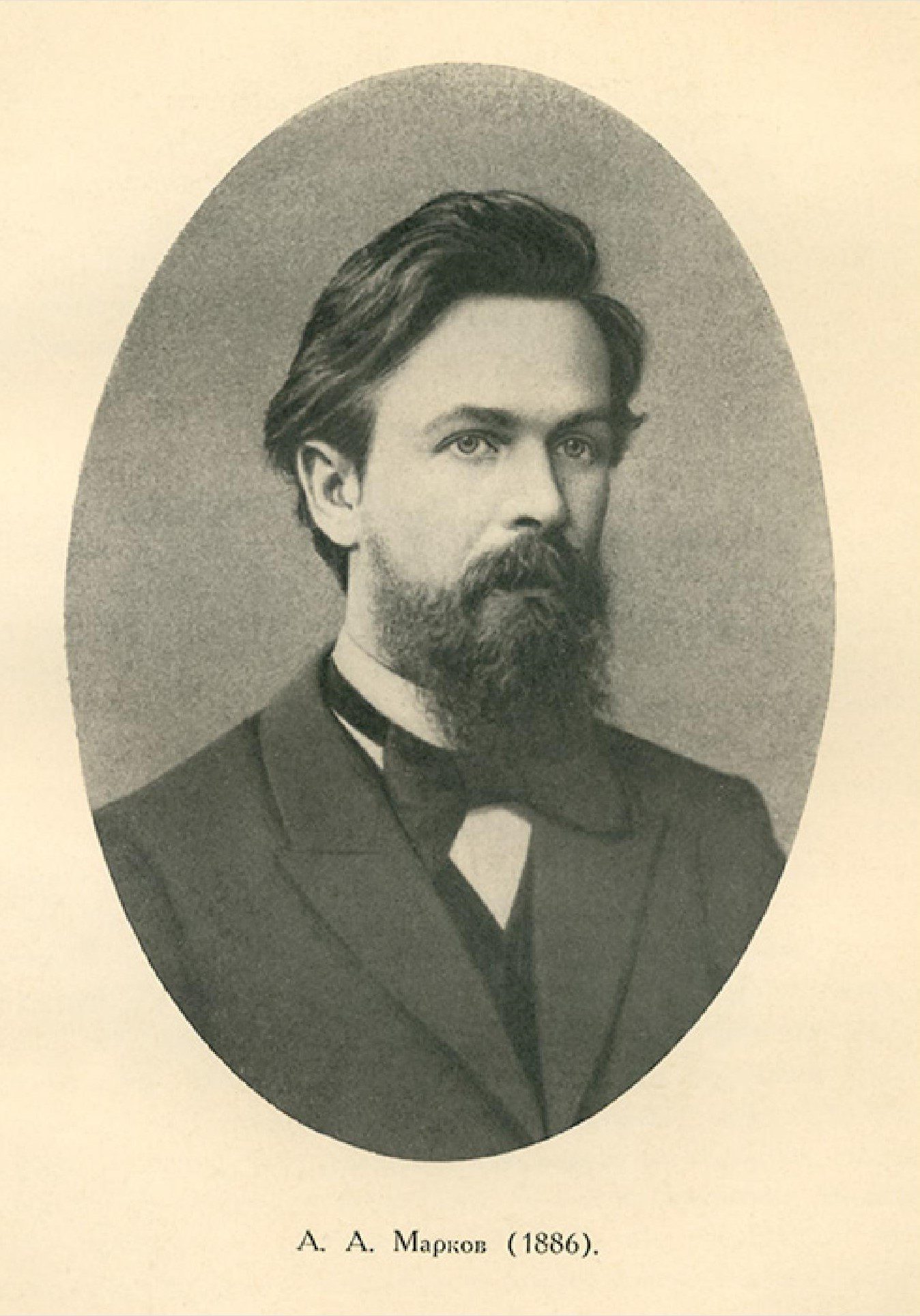
Brief Introduction of Andrei Markov
Andrei Andreyevich Markov (1856-1922) was a celebrated Russian mathematician who made foundational contributions to the field of probability theory. He is most famous for his pioneering work on stochastic processes, which led to the development of the concept of Markov chains. These chains are mathematical models of systems where the future state depends only on the current state, not on the sequence of events that preceded it. His research extended the law of large numbers and the central limit theorem to dependent variables, significantly broadening the scope of probability theory. To demonstrate his theories, he famously analyzed the patterns of vowels and consonants in Alexander Pushkin’s epic poem “Eugene Onegin”. His work has had a profound and lasting impact on numerous fields, including physics, engineering, economics, and computer science.
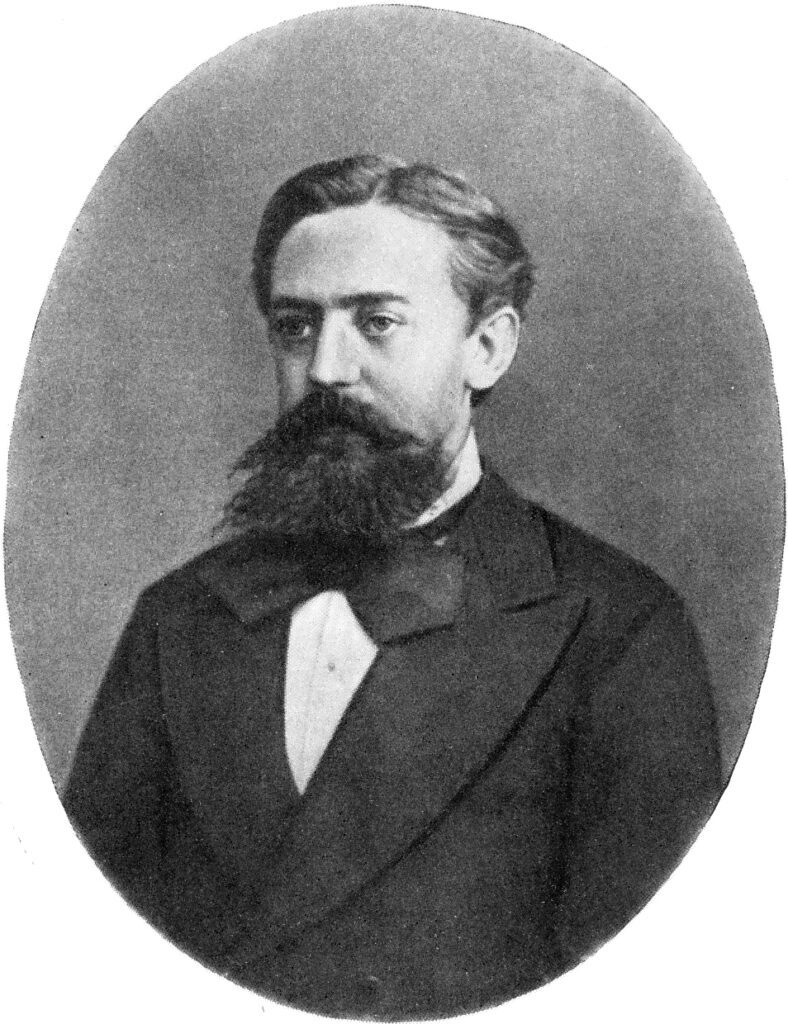
Andrei Markov Overview
| Full Name | Andrei Andreyevich Markov |
| Date of Birth | June 14, 1856 (O.S. June 2) |
| Age(as of 2025) | Deceased (died at age 66) |
| Birthplace | Ryazan, Russian Empire |
| Profession | Mathematician, Professor |
| Husband/Wife | Maria Ivanova Valvatyeva |
| Family | Father: Andrei Grigorievich Markov; Mother: Nadezhda Petrovna; Brother: Vladimir Andreyevich Markov; Son: Andrei Andreyevich Markov Jr. |
| Relationship/Affairs(GF/BF) | Information not disclosed. |
| Net Worth | Not publicly available. |
Early Life and Education of Andrei Markov
Andrei Andreyevich Markov was born in Ryazan, Russia, to Andrei Grigorievich Markov, who worked in the state forestry administration, and his first wife, Nadezhda Petrovna. Early in his life, the family relocated to St. Petersburg. Markov’s childhood was marked by poor health; he used crutches until the age of ten. He attended St. Petersburg Grammar School No. 5, where he demonstrated an exceptional talent for mathematics but performed poorly in most other subjects, earning a reputation as a rebellious student. His passion for mathematics was evident early on, and while still in grammar school, he wrote his first paper on the integration of linear differential equations. This brought him to the attention of prominent university professors.
In 1874, Markov enrolled in the Physics and Mathematics Faculty of Saint Petersburg Imperial University. There, he was taught by some of the most distinguished mathematicians of his time, including Yulian Sokhotski, Konstantin Posse, and most notably, Pafnuty Chebyshev, who became his doctoral advisor. Chebyshev was a towering figure in Russian mathematics and had a profound influence on Markov’s future work, particularly in number theory and probability theory. Markov excelled in his studies, winning a gold medal in 1878 for his essay on the integration of differential equations. He remained at the university to prepare for a lectureship, successfully defending his master’s thesis, “On the Binary Square Forms with Positive Determinant,” in 1880, and his doctoral thesis, “On Certain Applications of the Algebraic Continuous Fractions,” in 1884.
Andrei Markov’s Career
Markov’s pedagogical career began in the autumn of 1880, following the defense of his master’s thesis. He started as a privatdozent (an unsalaried lecturer) at St. Petersburg University, teaching differential and integral calculus. After his doctoral defense, he was appointed an extraordinary professor in 1886 and became a full professor in 1893. His academic ascent was rapid; he was elected as an adjunct to the Russian Academy of Sciences in 1886, an extraordinary member in 1890, and an ordinary academician in 1896, succeeding his mentor, Chebyshev.
While his early research focused on number theory and analysis, after 1900, Markov’s primary interest shifted to probability theory. He became the most prominent proponent of Chebyshev’s ideas in this field. His most significant contribution was the study of sequences of mutually dependent variables. He sought to extend the fundamental laws of probability, which had largely been applied to independent events, to systems where the outcome of one event influences the next. This investigation led to the development of what are now known as Markov chains.
In a landmark 1913 study, Markov applied his new theory to a practical and unconventional subject: the sequence of the first 20,000 letters in Alexander Pushkin’s novel in verse, “Eugene Onegin.” He categorized each letter as either a vowel or a consonant and analyzed the probabilistic dependencies between them. This analysis demonstrated that chains of dependent events could be rigorously modeled and was the first application of his groundbreaking theory. This work laid the foundation for the entire field of stochastic processes, which has become an indispensable tool in modern science and technology, with applications ranging from speech recognition and financial modeling to genetics and quantum physics.
Markov was also known for his strong principles. In 1908, following student riots, the university faculty was ordered to monitor students. Markov refused, declaring he would not be an “agent of the governance,” which led to his being barred from further teaching duties. He officially retired in 1905 but continued to lecture on the calculus of differences until 1910 and on probability theory for many years after, even resuming his teaching activities after the February Revolution of 1917.
Andrei Markov Personal Life & Family
Andrei Markov married Maria Ivanova Valvatyeva in 1883. He had known her since childhood, as she was the daughter of the owner of the estate his father managed. Their marriage was initially opposed by Maria’s mother due to Markov’s social standing at the time, but she eventually consented as his academic career progressed. The couple had one son, also named Andrei Andreyevich Markov (1903–1979), who followed in his father’s footsteps and became a notable mathematician in his own right, making significant contributions to constructive mathematics and recursive function theory.

Markov was a man of firm political and social convictions. He was a vocal critic of the Tsarist regime and its interference in academic affairs. In a famous act of protest, after the Russian Orthodox Church excommunicated the renowned writer Leo Tolstoy in 1901, Markov requested his own excommunication in 1912, a request the Church granted. He was an atheist. He also protested the Tsar’s annulment of Maxim Gorky’s election to the Academy of Sciences and refused state honors in response. His uncompromising nature and frequent letters to the press on social issues earned him the nickname “Neistovy Andrei” or “Andrew the Furious.” Despite his confrontational public persona, his motives were generally seen as high-minded. His health deteriorated in his later years, and after an eye operation, he continued to lecture while in severe pain, a testament to his dedication. He passed away in Petrograd (St. Petersburg) on July 20, 1922, after a long illness.
Awards and Achievements of Andrei Markov
- Gold Medal from the Physics and Mathematics Faculty of St. Petersburg University (1878)
- Elected adjunct to the Russian Academy of Sciences (1886)
- Elected extraordinary member of the Russian Academy of Sciences (1890)
- Elected ordinary academician of the Russian Academy of Sciences (1896)
- Appointed merited professor (1905)
Andrei Markov Net Worth and Income
Information regarding Andrei Markov’s net worth and income is not publicly available. As a university professor and academician in the Russian Empire and early Soviet period, his income would have been derived from his salary and academic stipends. There are no records of any significant personal wealth.
Legacy and Influence
Andrei Markov’s legacy is immense, primarily through the concept of the Markov chain, a cornerstone of modern probability theory and stochastic processes. His work fundamentally shifted the study of probability from independent events to dependent ones, opening up vast new areas of research and application. The writings of Markov and his contemporary Aleksandr Lyapunov are credited with elevating probability to the level of an exact mathematical science. Today, Markov chains and related concepts like Markov processes and Hidden Markov Models are essential tools in countless fields. They are used in Google’s PageRank algorithm, in modeling financial markets, in speech recognition software, in bioinformatics for gene sequencing, and in thermodynamics to model the behavior of particles. His rigorous, proof-based approach and his willingness to tackle complex, real-world dependencies set a new standard in the field and continue to influence mathematicians and scientists worldwide.
Interesting Facts about Andrei Markov
- He was an avid chess player.
- In his youth, he suffered from poor health and had to use crutches until he was ten years old.
- He and his younger brother, Vladimir Andreyevich Markov, a talented mathematician who died at 25, jointly proved the Markov brothers’ inequality.
- To protest the excommunication of Leo Tolstoy, Markov requested and was granted his own excommunication from the Russian Orthodox Church.
- He applied his theory of chains to analyze the alternation of vowels and consonants in Russian literature.
- His public criticism of the Tsarist government and outspoken nature led the press to nickname him “Andrew the Furious.”
Controversies
Markov was known for his contentious and uncompromising nature, which often led to conflicts. He publicly clashed with the Tsarist government and the Russian Orthodox Church. A notable controversy arose in 1908 when professors at St. Petersburg University were ordered to act as monitors for their students in the wake of political unrest. Markov staunchly refused this decree, viewing it as a demand to be an “agent of the governance.” This act of defiance resulted in him being removed from his teaching duties at the university. He also engaged in prolonged and often bitter public disputes with academic rivals, most notably Pavel Nekrasov of Moscow University, with whom he quarreled over mathematical, political, and philosophical issues.
Social Media Presence
- Instagram – Not applicable
- Twitter – Not applicable
- YouTube – Not applicable
Final Words about Andrei Markov
Andrei Andreyevich Markov remains one of the most important figures in the history of probability theory. His intellectual courage in extending classical probability to encompass dependent variables created a new paradigm in mathematics. The concept of the Markov chain, born from his rigorous analysis, has proven to be an incredibly powerful and versatile tool, demonstrating the profound connection between abstract mathematical theory and the observable world. Beyond his scientific achievements, Markov’s life was characterized by a deep commitment to his principles, whether in the academic arena or in the face of political pressure. His insistence on intellectual freedom and his protests against the injustices of his time paint a portrait of a man who was not only a brilliant mathematician but also a citizen of unwavering conviction. His legacy endures not just in textbooks and algorithms but in the spirit of inquiry that seeks to understand the complex, interconnected patterns of the world.