Brief Introduction of Aurore Gagnon
Marie-Aurore-Lucienne Gagnon, known tragically as Aurore Gagnon, was a young Canadian girl whose short life and brutal death in 1920 made her a sorrowful icon in Quebec’s history. At the age of ten, she succumbed to exhaustion and blood poisoning resulting from prolonged and horrific abuse at the hands of her father, Télesphore Gagnon, and particularly her stepmother, Marie-Anne Houde. The subsequent investigation and trials exposed the shocking extent of the cruelty she endured, captivating and horrifying the public. Her story, often referred to as that of “l’enfant martyre” (the child martyr), transcended the realm of a mere news event. It became a powerful cultural touchstone in Quebec, inspiring numerous plays, books, and films that have kept her memory alive for over a century, transforming her into a symbol of the suffering of abused children and prompting societal reflection on child welfare.
Aurore Gagnon Overview
| Full Name | Marie-Aurore-Lucienne Gagnon |
| Date of Birth | May 31, 1909 |
| Age(as of 2025) | Would have been 116 years old |
| Birthplace | Sainte-Philomène-de-Fortierville, Quebec, Canada |
| Profession | Not applicable (was a child) |
| Husband/Wife | Not applicable |
| Family | Télesphore Gagnon (Father), Marie-Anne Caron (Mother, deceased), Marie-Anne Houde (Stepmother), Marie-Jeanne Gagnon (Sister), and other siblings. |
| Relationship/Affairs(GF/BF) | Not applicable |
| Net Worth | Not applicable |
Early Life and Education of Aurore Gagnon
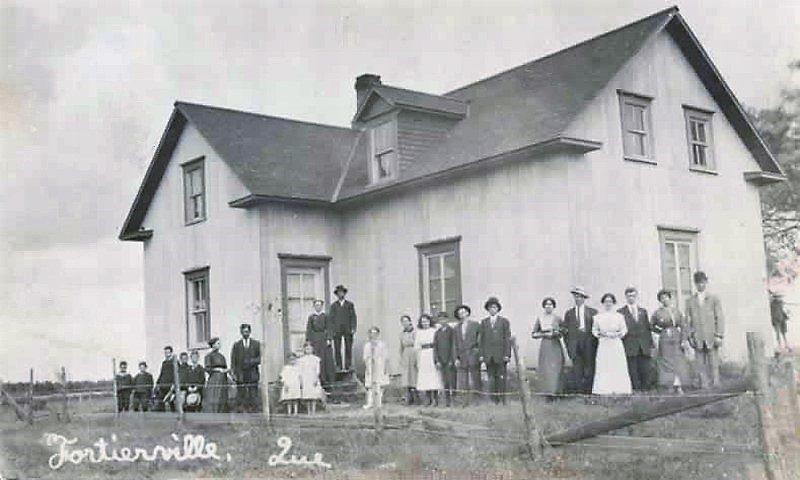
Aurore Gagnon was born on May 31, 1909, in the small rural village of Sainte-Philomène-de-Fortierville, Quebec. She was the second of five children born to Télesphore Gagnon, a local farmer, and his first wife, Marie-Anne Caron. Her siblings included an older sister, Marie-Jeanne, and younger siblings Lucina, Georges-Étienne, and Joseph. For the first few years, by all accounts, the Gagnon family lived a relatively normal and peaceful life. The children were described as healthy and the family was integrated into the local Roman Catholic community.
The family’s tranquility was shattered in 1916 when Aurore’s mother, Marie-Anne Caron, was diagnosed with tuberculosis and hospitalized. To help manage the household and care for the children, a widowed cousin’s wife, Marie-Anne Houde, moved into the Gagnon home with her own two sons. Tragedy first struck the family in November 1917 when Aurore’s two-year-old brother, Joseph, died in his bed. His death was officially ruled as natural, though some villagers later expressed suspicion. Just a few months later, on January 23, 1918, Aurore’s mother, Marie-Anne Caron, passed away from her illness. In a move that shocked the community for its haste, Télesphore Gagnon married Marie-Anne Houde just one week later, on February 1, 1918. For a brief period following her mother’s death and her father’s remarriage, Aurore lived with her maternal grandparents in a neighbouring municipality, where she was reportedly happy and healthy. However, she returned to her father’s home in the summer of 1919, which is when the systematic and horrific abuse began.
Aurore Gagnon’s Career
As Aurore Gagnon was a child who died at the age of ten, she did not have a career. Her life was tragically cut short before she had the opportunity to pursue education, employment, or any professional aspirations. The focus of the Aurore Gagnon wiki and biography is not on a career but on the circumstances of her life and death, which have become a significant part of Quebec’s social history.
Aurore Gagnon Personal Life & Family
Aurore Gagnon’s personal life was defined entirely by her family, which tragically became the source of her suffering. She was born to Télesphore Gagnon and Marie-Anne Caron. After her biological mother’s death, her family structure was irrevocably altered by her father’s swift marriage to Marie-Anne Houde. The household then consisted of Aurore and her surviving siblings, as well as Houde and her children from a previous marriage.
The period following the marriage marked the beginning of severe abuse for Aurore. While her father, Télesphore, was a participant in the abuse, witness testimonies from the subsequent trials indicated that the stepmother, Marie-Anne Houde, was the primary instigator of the cruelty. The abuse was relentless and multifaceted, involving physical beatings with various objects like axe handles and whips, psychological torment, and other forms of torture. In September 1919, the abuse was so severe that Aurore was hospitalized for over a month at the Hôtel-Dieu de Québec with a serious leg infection caused by her stepmother branding her with a heated metal poker. Upon her release and return home, the beatings and torment resumed, ultimately leading to her death. The family dynamic was one of terror, where other children in the house were often coerced into participating in or witnessing the abuse, as revealed in harrowing court testimony. The terms “Aurore Gagnon husband/wife” or “Aurore Gagnon gf/bf” are completely inapplicable to her story, as she was a young child whose life was contained within this tragic family setting.
Awards and Achievements of Aurore Gagnon
Aurore Gagnon received no awards or achievements in the conventional sense. As a ten-year-old victim of child abuse, her life did not include the milestones associated with public recognition. Her posthumous “achievement” is her enduring status as a symbol against child abuse in Quebec, a legacy born from immense tragedy.
Aurore Gagnon Net Worth and Income
The concept of “Aurore Gagnon net worth” is not applicable. She was a child living in a farming family in the early 20th century and possessed no personal wealth or income sources. Her family was engaged in farming and logging for their livelihood.
Legacy and Influence
The legacy of Aurore Gagnon is one of the most powerful and enduring in Quebec’s cultural history. Her death on February 12, 1920, and the subsequent trials of her father and stepmother became a massive media sensation. An autopsy revealed she had 54 wounds covering her body, leading to her death from sepsis and exhaustion. This horrific truth, laid bare in sensational newspaper reports, cemented her image as “Aurore, l’enfant martyre” (Aurore, the child martyr).
This was not a fleeting story. Less than a year after her death, in January 1921, a play by Henri Rollin and Léon Petitjean titled “Aurore, l’enfant martyre” premiered in Montreal. It was a phenomenal success, touring extensively throughout Quebec and beyond for decades. It is estimated to have been performed over 6,000 times by the 1950s, deeply embedding the story into the collective consciousness of French-speaking Canadians. The story was later adapted into several novels and, most notably, two major films. The first, “La petite Aurore, l’enfant martyre,” was released in 1952 and became a classic of Quebec cinema. A second film, “Aurore,” was released in 2005, introducing her story to a new generation and proving its continued relevance. Aurore’s story forced a public conversation about child abuse at a time when family matters were considered private, and it continues to serve as a cautionary tale about the need to protect vulnerable children.
Interesting Facts about Aurore Gagnon
- Following the trials, Aurore’s father, Télesphore Gagnon, was sentenced to life in prison for manslaughter but was paroled after only five years, reportedly for good behavior and a cancer diagnosis he ultimately survived. He returned to Fortierville and remarried again after his second wife’s death. He passed away in 1961.
- Marie-Anne Houde was initially convicted of murder and sentenced to be hanged. However, she was pregnant during the trial. Her sentence was commuted to life in prison, in part due to a public campaign after she gave birth to twins in jail. She was released in 1935 due to poor health and died of cancer the following year.
- The story of Aurore became so ingrained in Quebecois culture that the phrase “Stop acting like Aurore!” was for a long time used to tell a child to stop complaining.
- Aurore’s older sister, Marie-Jeanne, who testified at the trials, lived until 1986.
- Télesphore Gagnon and his family unsuccessfully attempted to get the 1952 film banned, arguing it would damage their reputation.
Controversies
The primary controversy surrounding the Aurore Gagnon biography is the failure of the community—including neighbors, extended family, and local authorities like the priest and justice of the peace—to intervene effectively despite knowing or suspecting the abuse. Trial testimonies revealed that many were aware of Aurore’s deteriorating condition and the cruelty she faced, yet no decisive action was taken until it was too late. This aspect of the tragedy raises enduring questions about collective responsibility and societal silence in the face of private family violence. The trials themselves were highly sensationalized, becoming a public spectacle that filled the courtroom daily, reflecting the deep shock and horror of the public. This media frenzy, while bringing attention to the case, also cemented a specific narrative of Aurore as a martyr and her stepmother as a monstrous villain, a narrative that has been explored and sometimes questioned in later artistic interpretations.
Social Media Presence
- Instagram – Not applicable
- Twitter – Not applicable
- YouTube – Not applicable
Final Words about Aurore Gagnon
Over a century after her death, the story of Aurore Gagnon continues to resonate deeply. She is more than a historical victim; she is a permanent cultural symbol in Quebec. Her tragic life serves as a stark and painful reminder of the realities of child abuse and the societal duty to protect the innocent. The repeated retelling of her story in plays, films, and books ensures that her suffering was not in vain. While the specific legal case is long closed, the moral and social questions it raised about community responsibility, the sanctity of the family versus the safety of a child, and the potential for cruelty hidden behind closed doors remain powerfully relevant. The name Aurore Gagnon is synonymous with martyred childhood, and her legacy endures as a powerful impetus for child protection and a testament to a young girl whose story, though heartbreaking, has never been forgotten.