
<
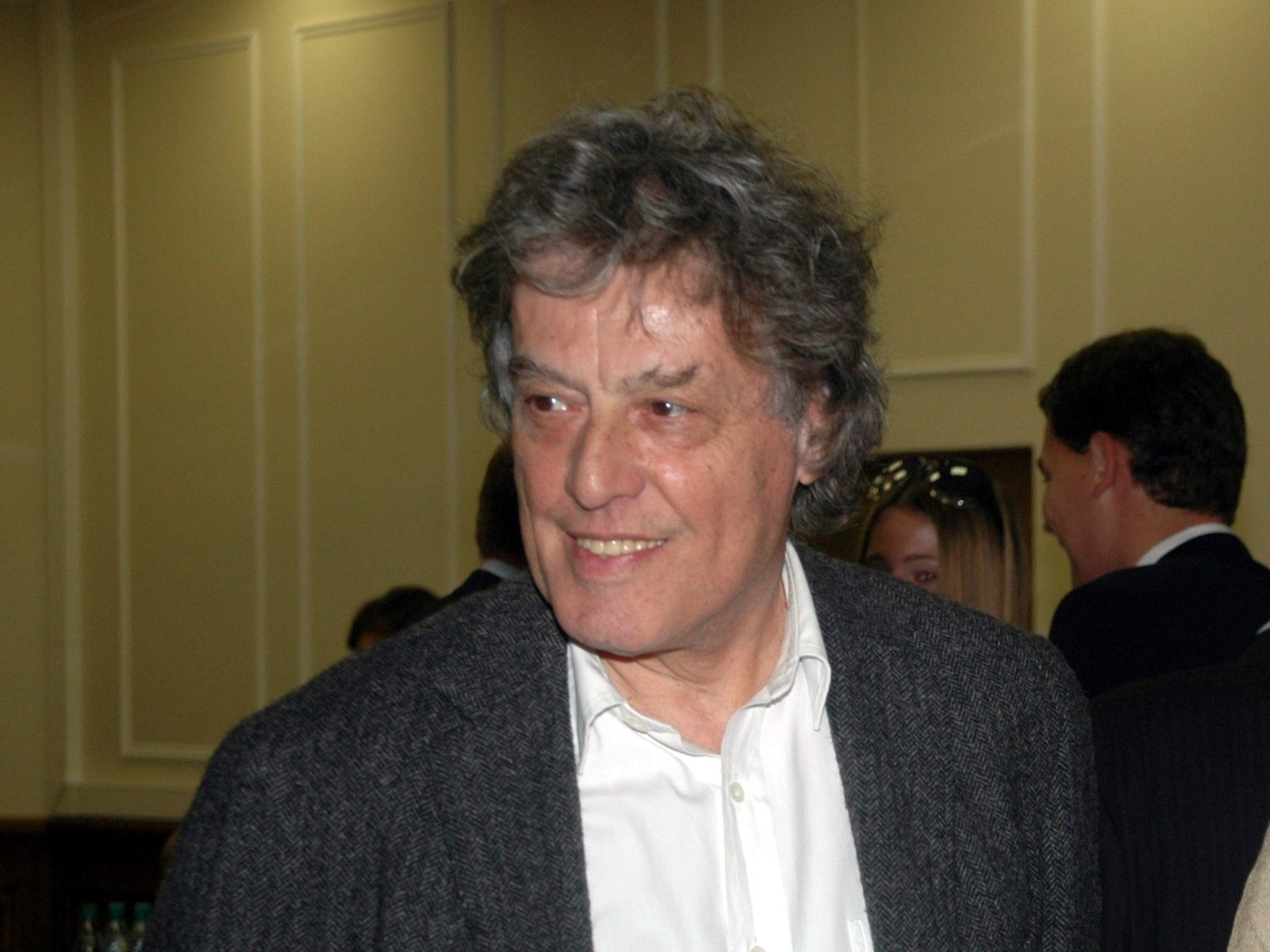
Brief Introduction of Tom Stoppard
Sir Tom Stoppard was a celebrated Czech-born British playwright and screenwriter, renowned for his intellectual depth, linguistic brilliance, and witty exploration of complex philosophical themes. Over a career spanning more than six decades, he became one of the most influential dramatists of the modern era, leaving an indelible mark on theatre, film, radio, and television. Stoppard first achieved widespread fame with his groundbreaking 1966 play, “Rosencrantz and Guildenstern Are Dead,” an absurdist tragicomedy that reimagines Shakespeare’s “Hamlet” from the perspective of two minor characters. His extensive body of work, which includes acclaimed plays like “Arcadia,” “The Real Thing,” and “Leopoldstadt,” is celebrated for its intricate wordplay and the masterful blending of humor with profound questions about human rights, censorship, and political freedom. As a screenwriter, he co-wrote the script for the Academy Award-winning film “Shakespeare in Love,” further cementing his status as a literary giant. Knighted in 1997 for his contributions to literature, his work is often characterized by the term “Stoppardian,” signifying a unique style of verbal gymnastics and the sophisticated handling of philosophical concepts.

Tom Stoppard Overview
| Full Name | Sir Tom Stoppard (born Tomáš Sträussler) |
| Date of Birth | July 3, 1937 |
| Age(as of 2025) | 88 |
| Birthplace | Zlín, Czechoslovakia (now Czech Republic) |
| Profession | Playwright, Screenwriter |
| Husband/Wife | Sabrina Guinness (m. 2014) |
| Family | Wife: Sabrina Guinness; Children: Oliver Stoppard, Barnaby Stoppard, Ed Stoppard, Will Stoppard |
| Relationship/Affairs(GF/BF) | Previously married to Josie Ingle (1965-1972) and Miriam Stern (1972-1992). He also had a relationship with actress Felicity Kendal. |
| Net Worth | Not publicly available; however, his long and successful career suggests significant wealth. |
Early Life and Education of Tom Stoppard
Tom Stoppard was born Tomáš Sträussler on July 3, 1937, in Zlín, Czechoslovakia, to Jewish parents, Martha Becková and Eugen Sträussler, a doctor for the Bata shoe company. His early life was profoundly shaped by the political turmoil of the era. On the eve of the Nazi invasion of Czechoslovakia in 1939, his family fled to Singapore. The family’s refuge was short-lived. In 1942, with the Japanese invasion of Singapore imminent, Stoppard, his mother, and his brother were evacuated to Darjeeling, India. His father, who remained behind, was killed during the invasion. In India, his mother married Major Kenneth Stoppard, a British army officer who adopted the boys and gave them his surname. In 1946, the family relocated to England. Stoppard attended schools in Nottinghamshire and Yorkshire, including Pocklington School. He did not pursue a university education, a decision he later regretted, instead leaving school at the age of seventeen to begin a career in journalism. This early work as a reporter and later a theatre critic in Bristol provided him with an invaluable education in the world of drama.
Tom Stoppard’s Career
Tom Stoppard’s career began in journalism, a field he entered at seventeen after forgoing university. He worked for the Western Daily Press and later the Bristol Evening World, where his role as a secondary drama critic ignited his passion for theatre. He began writing plays in 1960 after moving to London. His first play, “A Walk on the Water,” was televised in 1963 and later staged as “Enter a Free Man.” The major breakthrough came in 1966 with “Rosencrantz and Guildenstern Are Dead.” The play, which premiered at the Edinburgh Festival Fringe, was an overnight success and its 1967 production at the National Theatre catapulted him to international fame, earning him a Tony Award. This initial success was followed by a prolific output of critically acclaimed plays known for their intellectual vigor and linguistic pyrotechnics. His major stage works include “Jumpers” (1972), a philosophical murder mystery; “Travesties” (1974), which won a Tony Award for Best Play; “The Real Thing” (1982), a romantic comedy that also secured a Tony; and “Arcadia” (1993), a play celebrated for its juxtaposition of 19th-century Romanticism and modern chaos theory. His later works, such as the epic trilogy “The Coast of Utopia” (2002) and the deeply personal “Leopoldstadt” (2020), also won Tony Awards for Best Play, with “Leopoldstadt” also receiving a Laurence Olivier Award.
Beyond the stage, Stoppard had a distinguished career as a screenwriter. He co-wrote the screenplay for Terry Gilliam’s dystopian film “Brazil” (1985) and penned scripts for “Empire of the Sun” (1987) and “The Russia House” (1990). His greatest cinematic achievement came in 1998 when he co-wrote “Shakespeare in Love” with Marc Norman, for which he won an Academy Award, a Golden Globe Award, and a BAFTA Award for Best Original Screenplay. He also wrote screenplays for films like “Enigma” (2001) and “Anna Karenina” (2012), and adapted his own play for the 1990 film “Rosencrantz & Guildenstern Are Dead,” which he also directed. His work for television includes the acclaimed BBC/HBO series “Parade’s End” (2013). Throughout his career, Stoppard was lauded as one of the most significant dramatists of his generation, frequently compared to literary giants like Shakespeare and George Bernard Shaw.
Tom Stoppard Personal Life & Family
Tom Stoppard’s personal life was marked by three marriages and a deep, late-in-life exploration of his own family history. His first wife was Josie Ingle, a nurse, whom he married in 1965. They had two sons, Oliver and Barnaby, before divorcing in 1972. That same year, Stoppard married Miriam Stern, a doctor and author with whom he had two more sons, Will and Ed. Ed Stoppard followed in his father’s artistic footsteps, becoming a successful actor. Stoppard and Stern’s marriage ended in 1992. He was also in a notable relationship with actress Felicity Kendal from 1991 to 1998. In 2014, he married his third wife, Sabrina Guinness, a television producer and member of the prominent Guinness family.
A significant aspect of Stoppard’s later life was his engagement with his Jewish heritage. Having “put on Englishness like a coat” upon arriving in Britain as a child, he did not delve into his family’s past for many years. It was not until the 1990s, after the fall of communism, that he discovered the full extent of his family’s fate during the Holocaust. He learned that all four of his grandparents had been murdered in Nazi concentration camps, along with three of his mother’s sisters. This profound discovery deeply influenced his later work, most notably the highly personal and award-winning play “Leopoldstadt,” which explores themes of Jewish identity and history. Stoppard had four sons in total: Oliver, who works as a postman; Barnaby, a former video director who now runs a restaurant; William, who manages his violinist wife; and Ed, the actor.
Awards and Achievements of Tom Stoppard
- Academy Award for Best Original Screenplay for “Shakespeare in Love” (1999)
- Tony Award for Best Play for “Rosencrantz and Guildenstern Are Dead” (1968)
- Tony Award for Best Play for “Travesties” (1976)
- Tony Award for Best Play for “The Real Thing” (1984)
- Tony Award for Best Play for “The Coast of Utopia” (2007)
- Tony Award for Best Play for “Leopoldstadt” (2023)
- Laurence Olivier Award for Best New Play for “Arcadia” (1994)
- Laurence Olivier Award for Best New Comedy for “Heroes” (2006)
- Laurence Olivier Award for Best New Play for “Leopoldstadt” (2020)
- Golden Globe Award for Best Screenplay for “Shakespeare in Love” (1999)
- Knighted by Queen Elizabeth II for services to literature (1997)
- Japan Art Association’s Praemium Imperiale prize for theatre/film (2009)
- Writers Guild of America Laurel Award for Screenwriting Achievement (2013)
- David Cohen Prize for Literature (2017)
- Commander of the Order of the British Empire (CBE) (1978)
Tom Stoppard Net Worth and Income
The exact net worth of Sir Tom Stoppard is not publicly available, as he maintained a private stance on his personal finances throughout his life. However, considering his immensely successful and prolific career spanning over six decades, it is widely believed that his net worth was substantial. His income was derived from a variety of sources, primarily royalties from the countless productions of his plays performed worldwide. He also earned significant fees for his work as a screenwriter for major films, including the Academy Award-winning “Shakespeare in Love,” “Brazil,” and “Empire of the Sun.” Further income streams included sales of his published plays and novel, global licensing for his works, and fees for public appearances and lectures. Given the enduring popularity of his plays in both professional and amateur theatre circuits, his estate continues to earn from intellectual property and ongoing royalties.

Legacy and Influence
Sir Tom Stoppard’s legacy is that of one of the most intellectually dazzling and linguistically gifted playwrights of the 20th and early 21st centuries. His work reshaped modern theatre, combining razor-sharp wit with profound explorations of philosophy, science, history, and the human condition. The term “Stoppardian” was even added to the Oxford English Dictionary to describe his unique style, characterized by verbal brilliance and the deft handling of complex ideas. He leaves behind a majestic body of work that continues to challenge, entertain, and provoke thought in audiences worldwide. His influence is evident in the generations of writers and dramatists he has inspired. Stoppard was also a staunch advocate for human rights and free expression, often embedding themes of censorship and political freedom in his plays and working with organizations like PEN and Index on Censorship. His relationship with the National Theatre in London was particularly significant, with many of his landmark plays premiering there, cementing him as a cornerstone of modern British theatre. His plays are considered part of the essential theatrical canon and continue to be studied and performed globally, ensuring his cultural impact will endure for generations.
Interesting Facts about Tom Stoppard
- He did not attend university and began his career as a journalist at the age of 17.
- He only learned late in his life, after his mother’s death, that all four of his grandparents had died in the Holocaust.
- The term “Stoppardian,” signifying verbal brilliance and philosophical depth, entered the Oxford English Dictionary in 1978.
- He was knighted by Queen Elizabeth II in 1997 for his services to literature.
- He won a record-breaking five Tony Awards for Best Play.
- His stepfather’s belief that “to be born an Englishman was to have drawn first prize in the lottery of life” deeply influenced Stoppard’s sense of British identity.
- He was an avid cricket fan.
- He contributed to major film franchises, including “Indiana Jones” and “Star Wars.”
Controversies
Tom Stoppard’s career was largely free of major public controversies. However, his staunch anti-communist stance, born from his family’s experience fleeing an oppressive regime, sometimes placed him at odds with the prevailing left-wing politics of the British theatre scene, particularly in his earlier years. His passionate defense of writers and artists in totalitarian states was a recurring theme in his work and activism. Some critics occasionally found his plays to be more intellectually dazzling than emotionally resonant, a point of artistic debate rather than a controversy. Stoppard himself acknowledged this dynamic, once telling an interviewer he wanted to “demonstrate that I can make serious points by flinging a custard pie around the stage for a couple of hours.”
Social Media Presence
- Instagram – Not publicly available
- Twitter – Not publicly available
- YouTube – Not publicly available
Final Words about Tom Stoppard
Sir Tom Stoppard passed away peacefully at his home in Dorset, England, on November 29, 2025, at the age of 88, surrounded by his family. He leaves behind a monumental legacy as a literary genius whose work fundamentally shaped contemporary theatre. Celebrated for his “brilliance and humanity,” his wit, and his profound love of the English language, Stoppard’s plays continue to be a vital part of the global theatrical landscape. From the absurdist humour of “Rosencrantz and Guildenstern Are Dead” to the historical sweep of “The Coast of Utopia” and the poignant intimacy of “Leopoldstadt,” his body of work showcases an unparalleled ability to fuse intellectual curiosity with deep emotional resonance. His final play, “Leopoldstadt,” served as a powerful capstone to his career, confronting his own personal history and Jewish heritage with courage and artistry. Stoppard’s aspiration was to write for posterity, hoping his plays would become “part of the furniture” of the theatre world. Through his extraordinary contributions to drama and film, he undoubtedly achieved that goal, securing his place as one of the most important and enduring voices of his time.