
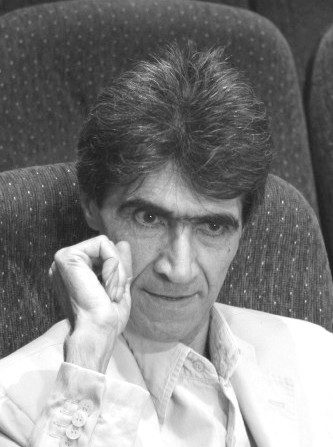
Brief Introduction of Naser Taghvai
Naser Taghvai was a highly esteemed Iranian film director, screenwriter, and photographer, celebrated as one of the pioneering figures of the Iranian New Wave cinema. Born in Abadan, Iran, his upbringing in the southern regions of the country profoundly influenced his artistic vision, with the local culture, ethnography, and atmosphere becoming hallmarks of his cinematic works. Taghvai began his career in the 1960s, initially gaining recognition for his insightful documentaries before transitioning to feature films. His debut feature, “Tranquility in the Presence of Others” (1970), immediately marked him as a significant voice in Iranian cinema. Throughout his career, Taghvai was known for his meticulous craftsmanship, literary adaptations, and unwavering commitment to artistic integrity, which often brought him into conflict with censorship bodies both before and after the 1979 Islamic Revolution. His most iconic work, the television series “My Uncle Napoleon” (1976), became a cultural touchstone in Iran. Despite a relatively small filmography, his impact on Iranian cinema is immense, cementing his legacy as a principled and influential auteur.
Naser Taghvai Overview
| Full Name | Naser Taghvai |
| Date of Birth | July 13, 1941 |
| Age(as of 2025) | 84 |
| Birthplace | Abadan, Iran |
| Profession | Film director, screenwriter, photographer, writer |
| Husband/Wife | Shahrnush Parsipur (m. 1967; div. 1973), Marzieh Vafamehr |
| Family | Son: Ali Taghvai (from his marriage to Shahrnush Parsipur). His father was a customs official. |
| Relationship/Affairs(GF/BF) | Information not disclosed. |
| Net Worth | Not publicly available. |
Early Life and Education of Naser Taghvai
Naser Taghvai was born on July 13, 1941, in Abadan, a city in the oil-rich Khuzestan province of southwestern Iran. His early life was characterized by constant movement due to his father’s profession as a customs official, which required the family to relocate frequently to various southern ports and border towns. This itinerant childhood immersed him in the diverse cultures and landscapes of southern Iran, an experience that would deeply shape his artistic sensibilities and become a recurring motif in his later cinematic work. He once likened his early years to that of a “teenage Sinbad” due to the constant travel. Taghvai developed a keen interest in literature during his high school years, even though he pursued a degree in mathematics. He eventually attended the University of Tehran, where he graduated from the Faculty of Letters and Human Sciences. His formal education, however, was secondary to his self-driven immersion in storytelling and photography. Before venturing into cinema, he was already an accomplished short story writer, honing his narrative skills that would become evident in his film adaptations.
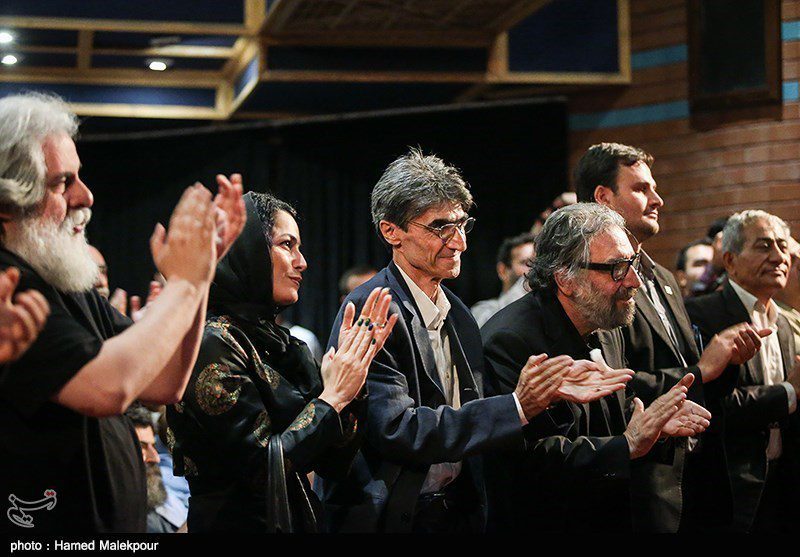
Naser Taghvai’s Career
Naser Taghvai’s career began not in feature films, but in the realm of documentary and television in the mid-1960s. He initially joined the technical crew for Ebrahim Golestan’s film “Brick and Mirror” in 1965, where he gained practical experience. By 1967, he started directing documentaries for television, with “Taxi Meter” being his first professional directorial work. His early documentaries, such as “The Jinn’s Wind” (1969) and “Arba’een” (1970), were lauded for their ethnographic depth and unique portrayal of life and rituals in southern Iran, establishing him as a master of the form. These works showcased his ability to blend reality with a poetic, often haunting, visual style.
His transition to narrative filmmaking marked a pivotal moment for Iranian cinema. Taghvai’s debut feature, “Tranquility in the Presence of Others” (1970), based on a story by Gholam-Hossein Sa’edi, was a critical success that announced him as a major talent of the burgeoning Iranian New Wave. The film’s psychological realism and critique of authority, however, led to it being banned. Despite this, it won the Silver Lion at the Venice Film Festival, gaining him international recognition. Throughout the 1970s, he directed several other notable films, but his most enduring work from this period is the television series “My Uncle Napoleon” (1976). An adaptation of Iraj Pezeshkzad’s satirical novel, the series became a phenomenal success and a cultural landmark in Iran, with its witty critique of despotism and paranoia resonating deeply with the public.
After the Iranian Revolution, Taghvai’s work rate slowed considerably due to increased censorship and financial difficulties. Nevertheless, he created one of his most acclaimed films, “Captain Khorshid” (1987). An ingenious adaptation of Ernest Hemingway’s “To Have and Have Not” transposed to the context of southern Iran, the film won the Bronze Leopard at the Locarno International Film Festival. In 1999, he directed a segment for the omnibus film “Tales of Kish,” which was nominated for the Palme d’Or at the Cannes Film Festival. His final feature film, “Unruled Paper” (2001), was released after a long hiatus and was noted for its compelling female protagonist. Several of his projects in the 2000s, including “Zangi and Rumi” and the war film “Bitter Tea,” were left unfinished due to lack of support and official obstruction, a testament to his difficult relationship with the authorities.
Naser Taghvai Personal Life & Family
Naser Taghvai’s personal life was largely kept private, though some details are known through his marriages and public statements. His father, Ali Taghvai, was a customs official, a job that led to the family’s nomadic lifestyle during Naser’s youth and profoundly influenced his work. In 1967, Taghvai married the acclaimed writer Shahrnush Parsipur. Their marriage lasted for seven years, ending in divorce in 1973. Together, they have a son named Ali Taghvai. He later married actress Marzieh Vafamehr, who remained his partner until his passing. Vafamehr often acted as his spokesperson, particularly in his later years when he had withdrawn from public life. Taghvai was known for his intellectual rigor and principled stand against censorship, a belief that defined not just his career but also his personal philosophy. He chose to live modestly, famously refusing a prize from the Fajr Film Festival that included a voucher for a car by stating he had neither the money for the car nor the space in his small home for the award itself. His life was a testament to his belief that “art that isn’t honest isn’t art.”

Awards and Achievements of Naser Taghvai
- Golden Gate Award for Best Short Film at the San Francisco International Film Festival for “Rahaee” (1971).
- Golden Lion for Best Short Film at the Venice Film Festival for “Rahaee” (1972).
- Silver Lion for Best First Work at the Venice Film Festival for “Tranquility in the Presence of Others” (1972).
- Golden India Catalina for Best Short Film at the Cartagena Film Festival for “Rahaee” (1974).
- Nominated for Best Director at the Fajr International Film Festival for “Captain Khorshid” (1987).
- Bronze Leopard (Third Prize) at the Locarno International Film Festival for “Captain Khorshid” (1988).
- Nominated for the Palme d’Or at the Cannes Film Festival for “Tales of Kish” (1999).
- Awarded a first-class artistic certificate by the Artists Evaluation Council of the Ministry of Culture and Islamic Guidance (2004).
- Received the Statue of Merit for a lifetime of artistic achievement at the 13th Iranian Cinema Festival.
Naser Taghvai Net Worth and Income
Information regarding Naser Taghvai’s net worth and specific income sources is not publicly available. As a filmmaker who often worked outside the commercial mainstream of Iranian cinema and faced significant periods of inactivity due to censorship, his wealth was not a matter of public record. He was known to live a modest lifestyle, prioritizing artistic integrity over commercial success. His income would have been derived from his work as a director and screenwriter for his films, television series, and documentaries.
Legacy and Influence
Naser Taghvai’s legacy is that of a master filmmaker and a moral conscience in Iranian cinema. He was a foundational figure of the Iranian New Wave, a movement that sought to create a more thoughtful, artistic, and socially conscious cinema, distinct from the commercial films of the era. His deep connection to the culture and geography of southern Iran brought a unique and authentic voice to the nation’s cinema, exploring its traditions, rituals, and struggles with a documentarian’s eye and a poet’s soul. Taghvai’s mastery of adapting literature to the screen is another significant part of his legacy, with works like “Captain Khorshid” and “My Uncle Napoleon” being exemplary models of cinematic adaptation. Beyond his films, his unwavering stance against censorship became a powerful statement in itself. In his later years, he chose silence over compromise, refusing to make films under a system he believed stifled artistic freedom. This act of protest solidified his image as an artist of immense integrity. He was also a mentor to younger generations of filmmakers, teaching that “the camera is not just an eye—it’s a conscience.” His influence continues to be felt in the works of Iranian directors who value personal vision and social commentary.
Interesting Facts about Naser Taghvai
- He was a talented writer of short stories before he became a filmmaker, with a published collection called “The Summer of That Year.”
- Despite his fame as a filmmaker, Taghvai never received formal training in cinema.
- He was deeply knowledgeable about literature, and most of his feature films are adaptations of novels and short stories.
- His popular television series, “My Uncle Napoleon,” became so ingrained in Iranian culture that its lines are still quoted in everyday conversation.
- He famously refused a Special Jury Prize from Iran’s Fajr Film Festival in 2002 as a form of protest.
- His documentary about the Ta’zieh passion play, “Final Exercise” (2004), helped in the registration of Ta’zieh as a UNESCO Intangible Cultural Heritage of Humanity.
- He declared he would no longer make films as long as censorship existed in Iran, a promise he largely kept for the last two decades of his life.
Controversies
Naser Taghvai’s career was marked by a principled and prolonged struggle against censorship, which could be viewed as a continuous controversy with the ruling powers. Both before and after the 1979 revolution, his work was scrutinized and often banned by authorities. His debut film, “Tranquility in the Presence of Others,” was banned for its critical portrayal of a retired military officer and its themes of societal decay. After the revolution, several of his projects were halted or left incomplete due to a lack of state support and direct opposition from government ministries. His most significant “controversy” was his public and vocal opposition to the state’s control over art. In 2013, he openly denounced the “terrible censorship” in Iran and declared his retirement from filmmaking as a form of protest, a stand that cemented his reputation as an uncompromising artist.
Social Media Presence
- Instagram – Not publicly available.
- Twitter – Not publicly available.
- YouTube – Not publicly available.
Final Words about Naser Taghvai
Naser Taghvai passed away on October 14, 2025, at the age of 84, leaving behind a profound void in the world of cinema. He is remembered not only for the masterful films he created but also for the films he chose not to make out of principle. His life and career were a testament to the belief that artistic freedom and integrity are paramount. Taghvai’s legacy is not just in his cinematic frames, but in his quiet defiance and the powerful silence he chose in his later years, an act that spoke volumes against censorship and artistic compromise. As his wife Marzieh Vafamehr eloquently stated upon his passing, he was “an artist who chose the difficulty of living freely, has earned his liberation.” His work continues to inspire filmmakers and audiences, representing a golden era of Iranian cinema and the enduring power of a singular artistic voice. The Naser Taghvai biography remains a study in talent, conviction, and the complex relationship between art and power.