

Brief Introduction of David Bowie
David Bowie, born David Robert Jones (January 8, 1947 – January 10, 2016), was an English singer, songwriter, and actor, widely regarded as one of the most influential musicians of the 20th century. His career, spanning over five decades, was defined by continuous reinvention, striking visual presentation, and groundbreaking musical innovation. Bowie captivated audiences with his ability to fuse music, fashion, and art, impacting popular culture significantly. Often dubbed the “chameleon of rock,” he pushed artistic boundaries, leaving an indelible mark on genres from glam rock to soul and electronic music.
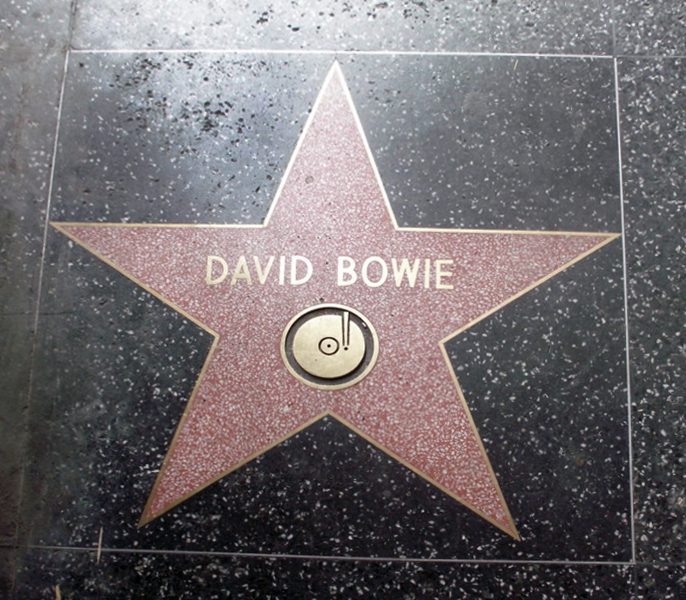
David Bowie Overview
| Attribute | Detail |
|---|---|
| Birth Name | David Robert Jones |
| Known As | David Bowie |
| Date of Birth | January 8, 1947 |
| Birthplace | Brixton, London, England |
| Date of Death | January 10, 2016 |
| Age at Death | 69 years old |
| Nationality | British |
| Parents | Margaret Mary “Peggy” (née Burns) and Haywood Stenton “John” Jones |
| Siblings | Terry Burns (half-brother), Annette Jones, Mary Ann Burns |
| Spouse(s) | Angie Barnett (m. 1970; div. 1980), Iman (m. 1992) |
| Children | Duncan Jones (né Zowie Bowie), Alexandria Zahra “Lexi” Jones |
| Height | 5 feet 10 inches (178 cm) |
| Profession | Singer, songwriter, actor, record producer, artist |
| Genres | Art rock, glam rock, pop, electronic, soul |
| Years Active | 1962–2016 |
| Net Worth (at time of death) | $230 million |
| Estate Value (as of 2025) | Over $300 million |
Early Life and Education of David Bowie
David Robert Jones was born on January 8, 1947, in Brixton, South London, England. His mother, Margaret Mary “Peggy” (née Burns), worked as a waitress, and his father, Haywood Stenton “John” Jones, was a promotions officer for the children’s charity Barnardo’s. The family resided at 40 Stansfield Road, bordering Brixton and Stockwell.
From a young age, Bowie displayed a keen interest in music and performance. He attended Stockwell Infants School, where he was noted as a gifted, single-minded, and sometimes defiant child. He later studied art, music, and design, including layout and typesetting. Inspired by his half-brother Terry, who introduced him to modern jazz, Bowie began playing the alto saxophone in 1961 and took lessons from baritone saxophonist Ronnie Ross. At the age of 15, in 1962, he formed his first band, The Konrads. A schoolyard fight over a girl in 1962 resulted in a serious eye injury to his left eye, causing the pupil to be permanently dilated and giving the appearance of different colored eyes. After graduating from Bromley Technical High School at 16, he worked briefly as a commercial artist while continuing to pursue music. He adopted the stage name David Bowie to avoid confusion with Davy Jones of The Monkees, inspired by the 19th-century American pioneer Jim Bowie and his knife.
David Bowie’s Career
Early Career and Breakthrough
Bowie embarked on his professional music career in 1963, playing with several local bands including The Konrads, The King Bees, The Manish Boys, and The Lower Third, releasing a string of unsuccessful singles. His self-titled debut album was released in 1967. His breakthrough came in 1969 with the single “Space Oddity,” which reached the top five in the UK singles chart, coinciding with the Apollo 11 moon landing. This song earned him an Ivor Novello Award in 1970.
Glam Rock and Alter Egos
After a period of experimentation, Bowie re-emerged in 1972 during the glam rock era with his flamboyant androgynous alter ego, Ziggy Stardust. The album The Rise and Fall of Ziggy Stardust and the Spiders from Mars (1972) and its single “Starman” brought him widespread popularity, marking a significant moment in rock history. He solidified this persona with the album Aladdin Sane (1973), which featured tracks like “The Jean Genie” and “Panic in Detroit.” Bowie’s theatrical stage presence, elaborate costumes, and makeup during this period blurred the lines between music and theater, setting new standards for showmanship.
Musical Reinvention and Global Success
Bowie’s career was characterized by constant musical reinvention, moving through various genres. In 1975, his style shifted towards “plastic soul” with the album Young Americans, which produced his first American number-one single, “Fame,” co-written with John Lennon and Carlos Alomar. Following this, his interest in the German music scene and his battle with drug addiction led him to move to West Berlin. Here, he collaborated with Brian Eno on the influential “Berlin Trilogy” albums: Low (1977), “Heroes” (1977), and Lodger (1979), which explored minimalist, ambient music and proved highly influential for future generations.
The 1980s saw Bowie achieve his greatest commercial success with the album Let’s Dance (1983), which topped charts in both the UK and US with its title track. Throughout the 1990s and 2000s, he continued to experiment with industrial and jungle music, releasing albums such as Hours… (1999), Heathen (2002), and Reality (2003).
Acting Career and Later Years
Beyond music, Bowie was an accomplished actor, starring in films such as The Man Who Fell to Earth (1976), for which he won a Saturn Award for Best Actor, and Labyrinth (1986). He also appeared in Merry Christmas, Mr. Lawrence (1983) and portrayed Nikola Tesla in The Prestige.
After a decade-long recording hiatus, Bowie unexpectedly resurfaced in 2013 with the critically acclaimed album The Next Day. His final album, Blackstar, was released on January 8, 2016, his 69th birthday, just two days before his death. The jazz-infused album is considered a masterwork and was his parting gift to fans, receiving multiple posthumous awards. He also co-wrote the musical Lazarus, which premiered in 2015.
David Bowie Personal Life & Family
David Bowie’s personal life was often kept private, though certain relationships and his family were integral to his journey. He married Mary Angela Barnett (Angie Bowie) on March 20, 1970. They had one son, Duncan Jones, born in 1971, originally nicknamed “Zowie” but now known by his birth name. Their marriage ended in divorce in 1980.
Bowie married Somali-American supermodel Iman Abdulmajid (Iman) on June 6, 1992. They had a daughter, Alexandria Zahra Jones, known as “Lexi,” born in 2000. Bowie also had a stepdaughter, Zulekha Haywood, from Iman’s previous marriage. He maintained residences in various locations, including New York City and Switzerland.
Towards the end of his life, Bowie explored Buddhism and meditation, and his will expressed a wish to be cremated and have his ashes scattered in Bali according to Buddhist rituals. He had a curious relationship with spirituality, often questioning his beliefs, which found expression in his music.
Awards and Achievements of David Bowie
David Bowie received numerous accolades throughout his prolific career, reflecting his immense impact on music and culture. He was inducted into the Rock and Roll Hall of Fame in 1996.
- Grammy Awards: Bowie won six Grammy Awards, including Best Video, Short Form for “David Bowie” in 1985, and a Lifetime Achievement Award in 2006. Posthumously, his album Blackstar received multiple Grammys in 2017, including Best Rock Performance, Best Rock Song, Best Alternative Rock Album, and Best Engineered Album (Non-Classical). In 2024, he also won a Grammy for Best Music Film for Moonage Daydream.
- Brit Awards: He received four Brit Awards, including Best British Male Solo Artist in 1984 and 2014, an Outstanding Contribution Award in 1996, and a posthumous Icon Award in 2016.
- Ivor Novello Awards: Bowie won an Ivor Novello Award for “Space Oddity” in 1970.
- Saturn Awards: He won a Saturn Award for Best Actor in 1976 for his role in The Man Who Fell to Earth.
- MTV Video Music Awards: Bowie won four MTV Video Music Awards, including Best Male Video for “China Girl” and a Video Vanguard Award in 1984, Best Overall Performance in a Video for “Dancing in the Street” in 1986, and Best Art Direction for “Blackstar” in 2016.
- Webby Awards: He received a lifetime achievement Webby Award in 2007 for his innovative presence on the internet and “pushing the boundaries of art and technology with his digital empire.”
Bowie’s record sales are estimated at over 100 million worldwide, making him one of the best-selling music artists of all time. He achieved nine platinum, eleven gold, and eight silver album certifications in the UK, with eleven number-one albums. In the US, he earned five platinum and seven gold certifications. He also famously declined a royal honor of Commander of the British Empire (CBE) in 2000 and a knighthood in 2003.
David Bowie Net Worth and Income
At the time of his death in 2016, David Bowie’s net worth was estimated to be $230 million. This impressive fortune was accumulated through his extensive music career, including album sales, royalties, concert tours, and acting roles.

A significant portion of his wealth came from his music catalog, which was estimated at $100 million at the time of his passing. In a notable financial move in 1997, Bowie pioneered “Bowie Bonds,” asset-backed securities collateralized by the royalties from his pre-1990 music catalog, generating $55 million. This innovative strategy provided him with immediate capital while allowing him to retain ownership of his copyrights.
His estate has continued to grow in value since his passing. In January 2022, Bowie’s estate sold his publishing catalog, encompassing over six decades of music and roughly 400 songs, to Warner Chappell Music for $250 million. As of 2025, David Bowie’s estate is estimated to be worth over $300 million, benefiting from ongoing royalties, merchandise sales, and licensing deals.
Bowie’s will stipulated that his fortune be divided among his family. His wife, Iman, inherited 50% of his estate (approximately $115 million at the time of his death) and their SoHo penthouse in New York. His son, Duncan Jones, and daughter, Alexandria “Lexi” Jones, each received 25% of his estate (around $57.5 million each in 2016), with Lexi also inheriting a property in upstate New York.
Legacy and Influence
David Bowie’s legacy is profound and far-reaching, establishing him as one of the most influential figures in popular culture. His unmatched ability to fuse music, fashion, and art transcended the boundaries of genres and inspired generations. He constantly reinvented his musical and visual identity, from rock and pop to soul, electronic, and jazz, influencing countless artists across various disciplines.
Bowie’s theatrical stage presence, elaborate costumes, and gender-bending personas, particularly with Ziggy Stardust, challenged societal norms and pushed artistic boundaries. His fashion choices were bold statements that defied conventions, with vibrant colors, quirky patterns, and avant-garde designs that continue to inspire designers and musicians. Beyond music and fashion, Bowie made significant contributions to film and visual arts, incorporating elements of theater and visual storytelling into his performances and music videos, which he saw as works of art in their own right.
Artists such as Madonna, Lady Gaga, Kanye West, The Smiths, The Cure, Nirvana, Talking Heads, Blondie, and The Killers have cited Bowie as a major influence on their work. His ability to constantly evolve and embrace individuality serves as a testament to his artistic genius and fearlessness. His music and artistic vision continue to resonate, fostering discussions around identity, gender, and innovation in the arts.
Interesting Facts about David Bowie
- Despite popular belief, David Bowie’s eyes were not actually different colors; the appearance was due to a permanently dilated pupil in his left eye, a result of a fight with his friend George Underwood in 1962.
- Bowie shared his birthday, January 8th, with another music legend: Elvis Presley.
- A young Luther Vandross contributed backing vocals to Bowie’s 1975 soul album Young Americans.
- He played almost every instrument on his eighth studio album, 1974’s Diamond Dogs, including the iconic guitar riff to “Rebel Rebel.”
- Bowie studied mime with Lindsay Kemp, which heavily influenced his theatrical performances.
- He was an avid art collector, amassing a collection reportedly worth over $100 million at the time of his death.
- His song “Space Oddity” gained significant traction after being used by the BBC in its coverage of the 1969 moon landing.
- One of Bowie’s most poignant statements, shared in a letter read by Gary Oldman at a posthumous tribute, was: “Music has given me over 40 years of extraordinary experiences… It has been my doorway of perception and the house that I live in.”
Controversies
While David Bowie generally avoided major scandals, his career was not without its challenging moments. Early in his career, he faced commercial struggles with his initial singles and debut album. His frequent artistic reinventions and genre-hopping, while ultimately lauded, sometimes initially alienated fans, such as his shift towards “plastic soul” with Young Americans. Bowie also openly discussed his struggles with drug addiction, particularly during his time in Los Angeles in the mid-1970s, which prompted his move to Berlin for a period of artistic and personal rejuvenation.
His refusal of a CBE in 2000 and a knighthood in 2003 was a quiet act, explained by him saying, “I would never have any intention of accepting anything like that. I seriously don’t know what it’s for.” These instances, rather than being outright controversies, often reflected his independent spirit and commitment to his artistic vision.
Social Media Presence
Given David Bowie’s passing in 2016, his personal social media presence in the contemporary sense is maintained by his estate. The official David Bowie website (davidbowie.com) serves as a central hub for his legacy.
The official David Bowie accounts on platforms like Instagram, Twitter (now X), and YouTube continue to share archival content, celebrate his work, and announce posthumous releases or events, keeping his memory and influence alive for millions of followers worldwide. While follower counts fluctuate, these platforms collectively boast millions of followers, reflecting his enduring global appeal and the dedicated efforts of his estate to manage his digital footprint. These channels ensure new generations can discover and engage with his vast body of work.
Final Words about David Bowie
David Bowie’s impact on music, fashion, and culture is immeasurable, solidifying his status as a true icon and a pioneering artist. He redefined what a pop star could be, consistently pushing boundaries and inspiring others to embrace individuality and creative exploration. His final album, Blackstar, released just two days before his death from liver cancer on January 10, 2016, served as a poignant and artistic farewell, a testament to his dedication to his craft until the very end.
Bowie’s legacy is one of perpetual artistic evolution, innovation, and courage. He opened “doorways of perception” for countless individuals, demonstrating that art can be a transformative force that challenges norms and encourages self-expression. Even years after his passing, his music continues to resonate, his style remains influential, and his fearless spirit continues to inspire artists and fans across the globe, ensuring his place as an immortal figure in cultural history.
 Team Dailly WikiBio