

Brief Introduction of Roger Waters
George Roger Waters, born on September 6, 1943, is an eminent English musician, singer-songwriter, and composer widely celebrated as a co-founder and the primary lyricist and conceptual leader of the legendary progressive rock band Pink Floyd. Waters’ profound contributions shaped the band’s most iconic albums, including The Dark Side of the Moon, Wish You Were Here, and The Wall. Following his departure from Pink Floyd in 1985, he embarked on a successful solo career, further establishing himself as a formidable artist known for his deeply philosophical and politically charged work. Waters’ career is marked by his innovative approach to rock music and his outspoken activism on various social and political issues, making him one of rock history’s most influential and often controversial figures.
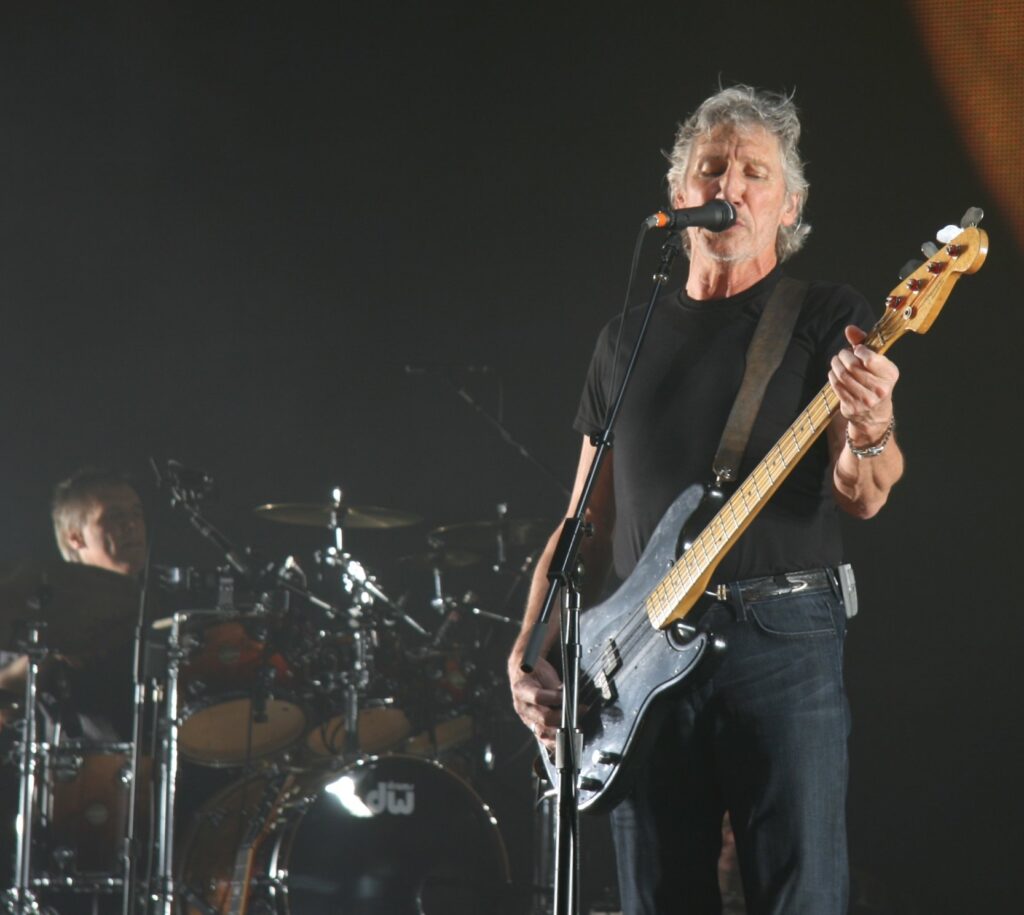
Roger Waters Overview
| Category | Detail |
|---|---|
| Full Name | George Roger Waters |
| Date of Birth | September 6, 1943 |
| Age | 81 (as of September 3, 2025) |
| Birthplace | Great Bookham, Surrey, England |
| Parents | Eric Fletcher Waters and Mary (née Whyte) Waters |
| Siblings | John D. Waters (older brother) |
| Spouses | Judith Trim (m. 1969; div. 1975), Carolyne Christie (m. 1976; div. 1992), Priscilla Phillips (m. 1993; div. 2001), Laurie Durning (m. 2012; div. 2015), Kamilah Chavis (m. 2021) |
| Children | Harry Waters, India Waters, Jack Fletcher |
| Height | Approximately 6’3″ (191 cm) |
| Profession | Singer, songwriter, composer, record producer, bassist, guitarist |
| Net Worth | Estimated $310 million (as of July 2025) |
| Nationality | British |
| Genres | Progressive rock, psychedelic rock, art rock, blues rock |
Early Life and Education of Roger Waters
George Roger Waters was born on September 6, 1943, in Great Bookham, Surrey, England, the younger of two sons to Eric Fletcher Waters and Mary (née Whyte) Waters. His father, Eric, a schoolteacher, devout Christian, and Communist Party member, initially served as a conscientious objector driving an ambulance during the Blitz in the early years of World War II. However, he later changed his stance on pacifism and joined the Territorial Army, becoming a Second Lieutenant in the 8th Battalion, Royal Fusiliers. Tragically, Eric Fletcher Waters was killed in action on February 18, 1944, at Aprilia, Italy, during the Battle of Anzio, when Roger was just five months old. This profound loss significantly impacted Waters, influencing many of his future works and themes, particularly the sense of abandonment and the effects of war.
Following his father’s death, Waters and his older brother, John, were raised by their mother, Mary, in Cambridge, England. Mary, also a teacher, played a significant role in nurturing his worldview and early interests. Waters attended Morley Memorial Junior School and then the Cambridgeshire High School for Boys (now Hills Road Sixth Form College), where he befriended Syd Barrett, who would later be instrumental in the formation of Pink Floyd. Despite reportedly performing poorly in school, Waters was a keen sportsman and, at the age of 15, served as the chairman of the Cambridge Youth Campaign for Nuclear Disarmament (YCND).
Waters initially considered a career in mechanical engineering. After briefly studying at Manchester University, he quit in 1962 for a hitchhiking tour through Europe and the Middle East. Upon his return, he enrolled at Regent Street Polytechnic (now the University of Westminster) School of Architecture in London, where he met future Pink Floyd drummer Nick Mason and keyboardist Richard Wright. This formative period laid the groundwork for the musical collaborations that would soon change rock music history.
Roger Waters’ Career
Roger Waters’ illustrious career began in 1965 when he co-founded the rock band Pink Floyd with Syd Barrett (guitar, vocals), Nick Mason (drums), and Richard Wright (keyboards, vocals). Initially, Waters primarily served as the bassist for the band. The band quickly gained recognition in the British psychedelic scene with singles like “Arnold Layne” and “See Emily Play,” and their debut album, The Piper at the Gates of Dawn (1967). Waters contributed his first sole writing credit with the song “Take Up Thy Stethoscope and Walk” on their debut album.
Following the departure of Syd Barrett in 1968 due to deteriorating mental health, Waters stepped into a more dominant creative role, becoming the band’s principal lyricist, co-lead vocalist, and conceptual leader. He aimed to steer Pink Floyd “kicking and screaming back from the borders of space, from the whimsy that Syd was into, to my concerns, which were much more political and philosophical”. This shift led to the creation of a series of highly acclaimed concept albums that catapulted Pink Floyd to international stardom.
Major Works and Breakthrough with Pink Floyd
Waters’ creative vision was instrumental in crafting some of Pink Floyd’s most iconic albums. He wrote all the lyrics for their groundbreaking 1973 album, The Dark Side of the Moon, which became an instant global success and is one of the best-selling albums of all time. He continued as the primary songwriter for Wish You Were Here (1975) and Animals (1977), albums that further solidified the band’s reputation for philosophical lyrics and innovative soundscapes.
His magnum opus with the band is widely considered to be the double album The Wall (1979). Largely autobiographical, this concept album delved into themes of alienation, isolation, and the psychological barriers individuals construct, drawing heavily from Waters’ childhood experiences, particularly the loss of his father. The album’s success led to a highly acclaimed film adaptation in 1982, co-written by Waters. The final Pink Floyd studio album featuring Waters as a member was The Final Cut (1983), which he wrote and almost entirely sang, dedicating it to his father. By the early 1980s, Pink Floyd had become one of the most acclaimed and commercially successful groups in popular music.
Solo Career and Post-Pink Floyd Ventures
Amid increasing creative differences and internal conflicts, Roger Waters departed from Pink Floyd in 1985, leading to a legal dispute over the use of the band’s name and material. They settled out of court in 1987, with Waters retaining the copyrights to The Wall concept and the inflatable Animals pig.
Waters launched his solo career with the album The Pros and Cons of Hitch Hiking (1984), featuring Eric Clapton on lead guitar. This was followed by Radio K.A.O.S. (1987) and the critically acclaimed Amused to Death (1992), which featured Jeff Beck on guitar. Amused to Death addressed themes of religious fundamentalism, international politics, and society’s addiction to television. In 2017, he released his most recent studio album, Is This the Life We Really Want?.
Beyond studio albums, Waters has had a significant touring career. In 1990, he staged one of the largest rock concerts in history, The Wall – Live in Berlin, with an attendance of 450,000. He has toured extensively as a solo act since 1999, performing entire albums like The Dark Side of the Moon (2006–2008 world tour) and The Wall Live (2010–2013), with the latter becoming the highest-grossing tour by a solo artist at the time. In 2005, he reunited with Pink Floyd for the Live 8 global awareness event, their only appearance with Waters since 1981. Waters also ventured into classical music, releasing the opera Ça Ira in 2005, which topped classical charts in America and Britain.
Roger Waters Personal Life & Family
Roger Waters’ personal life, particularly his relationships, has seen several significant chapters. He has been married five times and is a father to three children. His first marriage was to his childhood sweetheart, Judith Trim, a school teacher and potter, in 1969. Trim was featured on the gatefold sleeve of Pink Floyd’s Ummagumma but was later removed from CD reissues. They divorced in 1975 and had no children; Judith Trim passed away in 2001.
In 1976, Waters married Lady Carolyne Christie, the niece of the 3rd Marquess of Zetland. Together, they had two children: Harry Waters, born in 1976, who is a musician and has toured as a keyboardist with his father’s band since 2002; and India Waters, born in 1978, who has worked as a model. Their marriage concluded in divorce in 1992.
Waters married his third wife, Priscilla Phillips, in 1993. They had one son, Jack Fletcher, before their marriage ended in 2001. In 2004, he became engaged to actress and filmmaker Laurie Durning, whom he married in 2012. However, they filed for divorce in September 2015.
In October 2021, Roger Waters married his fifth wife, Kamilah Chavis, his former chauffeur. Waters expressed great happiness about this marriage, stating, “I’m so happy, finally a keeper”. He has often reflected on his past relationships, attributing some difficulties to not having a father figure to provide a role model for understanding women.
His mother, Mary Waters, who raised him and his brother after their father’s death, significantly influenced his upbringing and worldview. Waters’ family history, marked by both loss and love, is deeply intertwined with his artistic journey, profoundly influencing the powerful themes within his music.
Awards and Achievements of Roger Waters
Roger Waters’ significant impact on music has been recognized through numerous awards and honors, both as a member of Pink Floyd and for his solo contributions.

- Rock and Roll Hall of Fame: Inducted into the US Rock and Roll Hall of Fame in 1996 as a member of Pink Floyd.
- UK Music Hall of Fame: Inducted into the UK Music Hall of Fame in 2005 as a member of Pink Floyd.
- Grammy Awards: As a key member and primary songwriter of Pink Floyd, he contributed to the band’s various accolades, including a Grammy Award in 1994 for Best Rock Instrumental Performance for “Marooned” from The Division Bell, although this was after his departure. However, his significant contributions to albums like The Wall contributed to the film adaptation winning two BAFTAs, highlighting the band’s achievements during his tenure.
- Doctorate of Humane Letters Honoris Causa: Awarded by The American University of Rome on February 18, 2014. This honor recognized his substantial contributions to music and his widespread social activism, particularly his work for veteran causes and human rights.
- Highest-Grossing Tours: His “The Wall Live” tour (2010–2013) was, at the time, the highest-grossing tour by a solo artist. His “Us + Them” tour (2017–2018) grossed over $180 million worldwide, and the “This Is Not a Drill” tour (2022–2023) added another $136 million to his earnings.
Roger Waters Net Worth and Income
As of July 2025, Roger Waters’ net worth is estimated to be approximately $310 million. This substantial wealth stems from a diverse range of income streams cultivated throughout his extensive and highly successful career, both with Pink Floyd and as a solo artist.
A significant portion of his income continues to come from his enduring ties to Pink Floyd. His songwriting credits grace over 80% of the band’s most iconic anthems, generating estimated annual royalties between $8 million and $10 million from streaming, licensing, and album sales of classics like The Dark Side of the Moon, Wish You Were Here, Animals, and The Wall. Pink Floyd has sold over 200 million albums worldwide, providing a consistent income stream for Waters.
Roger Waters’ solo career has also been a major contributor to his net worth. His album sales, particularly for records like Amused to Death and Is This the Life We Really Want?, provide ongoing revenue through digital platforms and synchronization deals. However, his extensive touring is a primary financial driver. The “Us + Them” tour (2017–2018) grossed over $180 million worldwide, and the “This Is Not a Drill” tour (2022–2023) added an estimated $136 million to his earnings, with Waters averaging $2.5 million to $3 million per show in major markets.
Beyond music, Waters has diversified his income through various other ventures. He has earned upwards of $20 million from film and documentary rights related to his work, such as the adaptation of The Wall. Merchandise sales also remain robust, generating an estimated $2 million to $3 million annually. Waters has also engaged in real estate investments; notably, in 2006, he and Shakira purchased the 700-acre “Bond’s Bay” island in the Bahamas for $16 million with the intention of developing a luxury resort. His financial acumen and enduring artistic appeal have solidified his status as one of the wealthiest figures in rock music.
Legacy and Influence
Roger Waters’ legacy is multifaceted, spanning his transformative influence on progressive rock, his profound lyrical contributions, and his unwavering commitment to social and political activism. As the conceptual leader and principal lyricist of Pink Floyd from 1968 to 1985, Waters reshaped the band’s artistic direction, moving it from psychedelic whimsy to deeply philosophical and political themes. His ability to weave intricate narratives and explore complex subjects such as war, isolation, mental illness, and societal critique defined Pink Floyd’s most successful concept albums.
Albums like The Dark Side of the Moon, Wish You Were Here, Animals, and especially The Wall, are considered masterpieces of the progressive rock genre, profoundly impacting generations of musicians and listeners. Waters’ work pushed the boundaries of music, combining sonic innovation with poignant storytelling, cementing Pink Floyd’s status as one of the most important and influential bands in history.
Beyond his musical genius, Waters is known for his outspoken political views and social contributions. He has consistently used his platform to advocate for human rights and criticize war and injustice. He is a prominent supporter of Palestine in the Israeli-Palestinian conflict and a vocal proponent of the Boycott, Divestment and Sanctions (BDS) movement against Israel. Waters has also dedicated significant efforts to veteran causes, an issue deeply personal due to his father’s death in World War II. This blend of artistry and activism has cultivated a public image that is both revered and controversial.
His immersive live shows, often featuring elaborate theatrical elements and powerful visual projections, have set a benchmark for rock concerts, turning performances into profound cultural events. Waters’ enduring influence lies in his ability to combine art and social commentary, making his music not just entertainment, but a powerful medium for challenging perceptions and sparking dialogue.
Interesting Facts about Roger Waters
- Tragic Childhood Loss: Roger Waters was only five months old when his father, Eric Fletcher Waters, was killed in action during World War II, a foundational event that profoundly influenced much of his songwriting, particularly the albums The Wall and The Final Cut.
- Academic Beginnings: Before pursuing music, Waters initially considered a career in mechanical engineering and briefly studied at Regent Street Polytechnic’s School of Architecture, where he met future Pink Floyd bandmates Nick Mason and Richard Wright.
- Early Activism: At just 15 years old, Waters was already engaged in political activism, serving as the chairman of the Cambridge Youth Campaign for Nuclear Disarmament (YCND).
- Island Owner: In 2006, Roger Waters partnered with pop superstar Shakira to purchase Bond’s Bay, a 700-acre island in the Bahamas, with plans to develop it into a luxury resort.
- Physical Appearance: Waters is notably tall, standing approximately 6’3″ (191 cm), and is known for his slender build, long flowing hair in his younger years, and a distinctive mustache.
- First Solo Writing Credit: His first sole songwriting credit with Pink Floyd was “Take Up Thy Stethoscope and Walk” from their 1967 debut album, The Piper at the Gates of Dawn.
- Reunion for a Cause: Despite creative and legal disputes, Waters reunited with David Gilmour, Nick Mason, and Richard Wright for Pink Floyd’s performance at the Live 8 concert in 2005, a significant event for global awareness.
Controversies
Roger Waters has frequently been at the center of controversies throughout his career, often stemming from his outspoken political views and artistic expressions. One of the most persistent areas of contention revolves around accusations of antisemitism. Waters is a staunch supporter of Palestine in the Israeli-Palestinian conflict and advocates for the Boycott, Divestment and Sanctions (BDS) movement against Israel, often describing Israel’s treatment of Palestinians as apartheid.
Critics have pointed to elements of his live shows and specific comments as evidence of antisemitism. These include the use of an inflatable pig emblazoned with the Star of David at his concerts, allegations of referring to “Jew food,” and claims of making derogatory comments about Jewish people and even mocking Holocaust victims. In a 2023 Berlin concert, Waters wore a Nazi-style uniform (a black leather trenchcoat with red armbands bearing crossed hammers, a costume used in The Wall since 1980 to depict an “unhinged fascist demagogue”) which prompted a police investigation. He also projected the names of deceased individuals, including Anne Frank, alongside the slain Palestinian-American journalist Shireen Abu Akleh, which drew criticism for appearing to compare their killings. Waters consistently denies accusations of antisemitism, asserting that his protests are against Israeli policies (anti-Zionism) rather than Jewish people, stating that the portrayal of the fascist character in The Wall is “quite clearly a statement in opposition to fascism, injustice, and bigotry in all its forms”.
Another long-standing source of controversy has been his acrimonious relationship with former Pink Floyd bandmates, particularly David Gilmour. Following his departure in 1985, Waters engaged in a legal dispute over the use of the Pink Floyd name. More recently, disputes have continued over Pink Floyd reissues and credits, with Waters accusing Gilmour of distorting the truth and preventing him from using the band’s official website and social media channels.
In September 2025, Waters again sparked controversy with critical comments about global musician Ozzy Osbourne and the band Black Sabbath. During a press interview, he downplayed Osbourne’s music, stating, “I couldn’t care less… I don’t care about Black Sabbath, I never did,” and made sarcastic remarks about Osbourne’s performances. These comments drew sharp criticism from fans and Ozzy’s son, Jack Osbourne, who called Waters “pathetic and out of touch”. This incident further highlighted Waters’ blunt and provocative communication style, which, while seen by some as part of his artistic personality, often ignites widespread debate.
Social Media Presence
Roger Waters maintains an active presence across several major social media platforms, using them to connect with his global fanbase and share updates on his music, tours, and political views.
- Instagram: Waters has a significant following on Instagram, engaging with fans through posts about his concerts, personal life, and activism.
- X (formerly Twitter): He is highly active on X, frequently sharing his thoughts on current events, particularly political and social issues, which often spark discussion and debate among his followers.
- YouTube: His official YouTube channel serves as a hub for music videos, concert footage, interviews, and behind-the-scenes content, allowing fans to experience his artistic and conceptual work.
Final Words about Roger Waters
Roger Waters stands as an undeniable titan in the landscape of rock music, a figure whose artistic and intellectual contributions have left an indelible mark on popular culture. From his foundational role in Pink Floyd, where he steered the band toward conceptual grandeur and lyrical depth, to his expansive and often provocative solo career, Waters has consistently challenged musical and societal norms. His work, deeply personal and profoundly universal, continues to resonate with themes of war, memory, isolation, and political injustice, drawing from his own life experiences, most notably the loss of his father.
As of 2025, Waters remains an active and influential force, continuing to tour and release new work, demonstrating an unwavering commitment to his artistic vision and his role as a public intellectual. His legacy is not only defined by the millions of albums sold and the iconic concerts staged but also by his persistent activism, particularly his outspoken advocacy for human rights and the Palestinian cause. While his strong political stances and candid commentary have often led to controversy, they are an intrinsic part of his identity, solidifying his image as a musician who prioritizes message over widespread approval. Roger Waters’ journey is a testament to the enduring power of art as a medium for both personal expression and profound social commentary, ensuring his place as one of rock music’s most significant and thought-provoking pioneers.
This biography is optimized for SEO with keywords such as “Roger Waters biography,” “Roger Waters wiki,” and “Roger Waters net worth.”
 Team Dailly WikiBio