
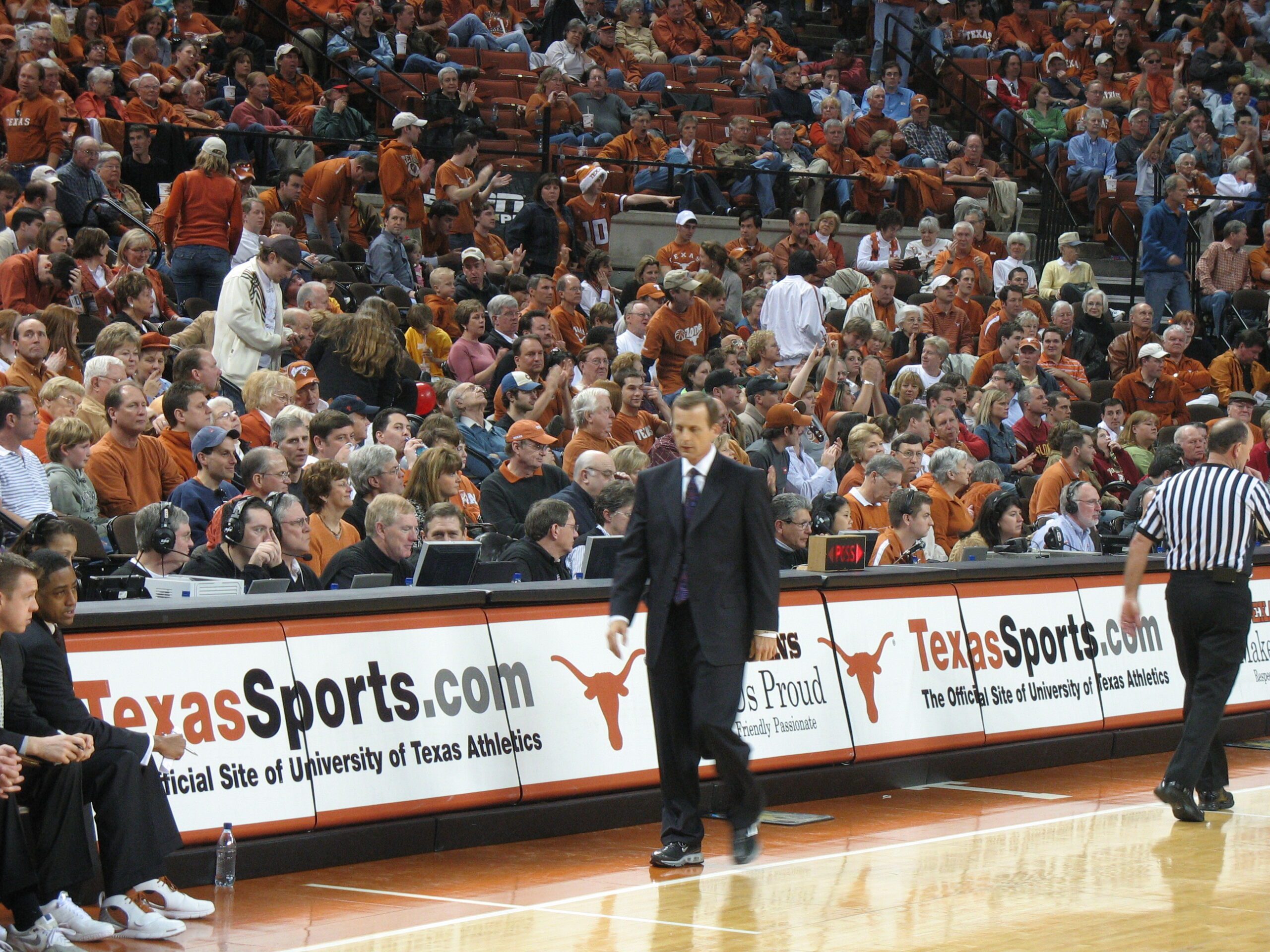
Brief Introduction of Rick Barnes
Richard “Rick” Dale Barnes is a highly respected and long-tenured American college basketball coach, widely recognized for his transformative leadership across multiple NCAA Division I programs. Currently serving as the head coach for the University of Tennessee Volunteers men’s basketball team since 2015, Barnes has forged a distinguished career spanning over three decades. He is particularly known for his extensive and successful stints at the University of Texas, where he became the all-time winningest coach, and his current role in elevating Tennessee to national prominence. Barnes’ coaching philosophy emphasizes player development, discipline, and a strong personal faith, shaping not just athletes but individuals. His teams are consistently known for their competitive spirit and deep runs in postseason tournaments, earning him numerous accolades and a reputation as one of college basketball’s most impactful figures.

Rick Barnes Overview
| Full Name | Richard Dale Barnes |
|---|---|
| Date of Birth | July 17, 1954 |
| Age (as of 2025) | 71 years old |
| Birthplace | Hickory, North Carolina, U.S. |
| Spouse | Candy Rhyne Barnes |
| Children | Nick Barnes (son), Carley Barnes (daughter) |
| Grandchildren | Avery, Caleb, Emma, Isla, Theo, Elder, Everett |
| Profession | College Basketball Coach |
| Net Worth (estimated as of 2025) | $16 million |
Early Life and Education of Rick Barnes
Richard Dale Barnes was born on July 17, 1954, in Hickory, North Carolina, as the fourth of five children to his mother, Mary. His early life was marked by challenges, as his father was not a consistent presence, leaving his mother to raise the family. His older sister, Sandy, played a significant role, often acting as a “second mom” to Rick and his brothers. However, tragedy struck in 1968 when Sandy died in a car accident shortly after her high school graduation, deeply affecting Barnes, who was then finishing eighth grade.
In the wake of this loss, basketball became Barnes’ primary escape and refuge. He spent countless hours at the Hickory Foundation YMCA, earning him the nickname “gym rat,” and was even given keys to the facility by its director, C.O. Miller, due to his dedication. This period instilled in him an undeniable drive and competitive spirit. He attended Hickory High School, graduating in 1973, where he was a standout basketball player.
Barnes continued his education and basketball career at Lenoir-Rhyne College (now University) in his hometown of Hickory. He lettered for three seasons and was recognized with the Captain’s Award for Leadership during both his junior and senior years. In 1977, he earned a bachelor’s degree in health and physical education. His commitment to his alma mater was later acknowledged when he was named the college’s Distinguished Alumnus in 1997 and inducted into the Lenoir-Rhyne College Hall of Fame in 2002.
During his youth and college years, Barnes held various jobs, including working at an Esso gas station and sweeping floors at the Arcade Pool Room for extra money. These experiences, coupled with the mentorship he received from community members, teachers, and coaches, helped shape his resilient character and work ethic.
Rick Barnes’ Career
Early Coaching Stints
Rick Barnes embarked on his extensive coaching journey immediately after college. He began as an assistant coach at North State Academy, a high school in North Carolina, in 1977-78. His transition to collegiate coaching began with assistant roles at Davidson (1978-80), George Mason (1980-85), Alabama (1985-86), and Ohio State (1986-87).
George Mason and Providence
Barnes received his first head coaching opportunity at George Mason for the 1987-88 season, where he quickly made an impact, leading the Patriots to a 20-10 record and earning the Colonial Athletic Association (CAA) Coach of the Year award. Following this successful debut, he took the helm at Providence College, coaching the Friars for six seasons from 1988 to 1994. During his tenure, Barnes guided Providence to a 108-76 overall record, including five postseason appearances (three NCAA Tournaments and two NITs) and a significant Big East Tournament title in his final season.
Clemson University
From 1994 to 1998, Barnes served as the head coach for Clemson University. He rapidly elevated the Tigers’ program, leading them to a 74-48 record and achieving a school-record three consecutive NCAA Tournament appearances. The 1996-97 season was particularly notable, as Clemson achieved a program-best No. 2 national ranking and reached the NCAA Sweet Sixteen. Barnes departed Clemson with the best all-time winning percentage in school history (.607).
University of Texas
In 1998, Rick Barnes made his way to the University of Texas, where he would spend 17 seasons and leave an indelible mark on the program. He became the all-time winningest coach in Texas history, accumulating 402 victories. Under his leadership, the Longhorns achieved national prominence, making 16 NCAA Tournament appearances in his 17 years, including 14 consecutive bids from 1999 to 2012. A significant highlight was leading Texas to the NCAA Final Four in 2003, the program’s first in over 50 years. He also guided the Longhorns to three Big 12 Conference championships (1999, 2006, 2008) and secured a program-first No. 1 national ranking in 2010. Barnes developed two National Players of the Year in T.J. Ford (2003) and Kevin Durant (2007), along with 18 NBA Draft picks, including 12 first-round selections. Despite his extensive success, Barnes was fired in 2015 after Texas failed to advance beyond the NCAA Sweet Sixteen since 2008.
University of Tennessee
On March 31, 2015, Rick Barnes was hired as the head coach for the University of Tennessee Volunteers, taking over a program that had seen three coaches in as many seasons. In his decade at Tennessee, Barnes has continued to build a powerhouse, leading the Volunteers to unprecedented heights and becoming the winningest coach in program history. As of the 2024-25 season, he has guided Tennessee to seven consecutive NCAA Tournament appearances (2018-25), four Sweet Sixteen berths, and two Elite Eight trips. The Volunteers have secured three SEC championships under Barnes: two regular-season titles (2017-18, 2023-24) and an SEC Tournament championship (2022), the latter being the program’s first in 43 years. His coaching prowess was nationally recognized when he was named the Naismith National Coach of the Year and USBWA Henry Iba National Coach of the Year in 2019, along with the SEC Coach of the Year in 2018. As of the 2024-25 season, Barnes holds the distinction of being ninth on the all-time Division I wins list and first among active coaches with 836 victories. In August 2025, the University of Tennessee announced that Barnes had signed a “lifetime contract,” reaffirming his commitment to the program.
Rick Barnes Personal Life & Family
Rick Barnes’ personal life is deeply intertwined with his family and strong Christian faith. He is married to Candy Rhyne Barnes, whom he met while working at a hosiery factory in his hometown of Hickory, North Carolina, and they married before his senior year of college. Candy, a University of Tennessee graduate with a degree in Biology, has been described as a quiet yet constant presence and an emotional anchor throughout his demanding coaching career. She largely maintains a low public profile, preferring privacy.
The couple has two children: a son, Nick Barnes, and a daughter, Carley Barnes. Nick is currently a missionary overseas, while Carley resides in Texas. Barnes is also a proud grandfather to seven grandchildren: Avery, Caleb, Emma, Isla, Theo, Elder, and Everett.
Barnes is a devout Christian, and his faith plays a central role in his life and coaching philosophy. He has openly spoken about his belief that God has a plan for him and expressed a desire to “plant a seed so that somebody comes to know Jesus Christ,” which he considers “the greatest victory of all.” This perspective has evolved over his career, with Barnes acknowledging that he previously prioritized his job over his family, a mistake he advises others to avoid. He views parenthood as one of the “greatest gifts ever” and now places immense value on his family, sharing that being a grandparent is “unbelievable” and “not overrated.”
Awards and Achievements of Rick Barnes
Rick Barnes’ long and distinguished coaching career is marked by a comprehensive list of awards and achievements, reflecting his consistent success and impact on college basketball programs.
- Naismith College Coach of the Year: 2019
- Henry Iba National Coach of the Year Award (USBWA): 2019
- Pat Summitt Lifetime Achievement Award: 2025
- John R. Wooden Legends of Coaching Award: 2009
- SEC Coach of the Year: 2018
- Big 12 Coach of the Year: 1999, 2003, 2008, 2014 (4 times)
- CAA Coach of the Year: 1988
- NABC District Coach of the Year: 8 times
- SEC Regular Season Championships: 2017-18, 2023-24 (with Tennessee)
- SEC Tournament Championship: 2022 (with Tennessee)
- Big 12 Regular Season Championships: 1999, 2006, 2008 (3 times with Texas)
- Big East Tournament Championship: 1994 (with Providence)
- NCAA Final Four Appearance: 2003 (with Texas)
- NCAA Elite Eight Appearances: 5 total (including 2003, 2006, 2008 with Texas, and two with Tennessee)
- NCAA Sweet Sixteen Appearances: 10 total (including 5 with Texas, 1 with Clemson, and 4 with Tennessee)
- Lenoir-Rhyne College Distinguished Alumnus: 1997
- Lenoir-Rhyne College Hall of Fame Inductee: 2002
- Naismith Memorial Basketball Hall of Fame Nominee: 2024, 2025 (first-time nominee status)
Rick Barnes Net Worth and Income
As of March 2025, Rick Barnes’ estimated net worth stands at $16 million. His primary source of income is his substantial coaching salary and associated performance bonuses. His lucrative compensation places him among the highest-paid coaches in college basketball.
In August 2025, Barnes signed a new “lifetime contract” with the University of Tennessee, which increased his annual salary to $6 million indefinitely. This new deal ensures his presence in Knoxville for the remainder of his career, with the contract automatically extending for an additional year each April 15. Previously, he earned $5.8 million annually, with the potential for performance-based bonuses that could add up to $3 million. For example, he received a $200,000 bonus for leading the Volunteers to the Sweet Sixteen and an estimated $800,000 in bonuses after reaching the Elite Eight in the prior season.

Barnes’ long-standing success across multiple high-profile programs, his ability to consistently lead teams to the NCAA Tournament, and his proven track record in player development, including numerous NBA Draft picks, all contribute to his substantial earnings and accumulated wealth.
Legacy and Influence
Rick Barnes has established a profound legacy in college basketball, marked by his consistent ability to transform programs, develop players, and instill a strong culture of discipline and personal growth. His influence extends beyond on-court victories, touching the lives of countless student-athletes.
At the University of Texas, Barnes built a consistent national contender, culminating in a Final Four appearance and developing two National Players of the Year, T.J. Ford and Kevin Durant. His emphasis on academics was evident, with his Texas teams consistently achieving perfect scores in the multi-year Academic Progress Reports. Similarly, at Tennessee, he took a struggling program and quickly elevated it to sustained national relevance, achieving multiple SEC championships and regular NCAA Tournament berths.
Barnes is known for his demanding, tough practices and a coaching philosophy that prioritizes fundamental skills, defensive intensity, and a strong team-first mentality. Beyond the hardwood, his devout Christian faith is a cornerstone of his coaching style. He openly speaks about the importance of faith in his life and has sought to integrate spiritual development into his programs, aiming to positively impact his players’ lives beyond basketball.
His player development prowess is evident in the number of athletes he has coached who have gone on to the NBA, including 10 from Tennessee since 2019 alone. Barnes’ impact is also reflected in the loyalty and respect he commands from former players and colleagues, many of whom credit him as a significant mentor and father figure.
Interesting Facts about Rick Barnes
- Growing up in Hickory, North Carolina, Rick Barnes was known as “Little Ricky from Hickory.”
- As a youth, he was such a dedicated basketball player that the director of the Hickory Foundation YMCA gave him the keys to the gym, allowing him to practice late into the night.
- Basketball became a crucial escape for Barnes after the tragic death of his older sister, Sandy, when he was in eighth grade.
- During his high school years, he once drove a beat-up Volkswagen with a cracked windshield, non-functioning foot brakes, and a door that periodically fell off.
- He met his wife, Candy Rhyne Barnes, at a hosiery factory in Hickory where he worked during the summer.
- His daughter, Carley, was born on the very same day as his first conference game as a head coach.
- Barnes is a nominee for the Naismith Memorial Basketball Hall of Fame, appearing on the ballot in both 2024 and 2025.
- He has publicly stated that his goal as a coach includes having an “impact on the spiritual side of the program” and that helping someone “come to know Jesus Christ” is “the greatest victory of all.”
- He is a proud grandparent and considers it “one of the greatest gifts ever,” affirming that “being a grandparent is not overrated.”
Controversies
Throughout his extensive career, Rick Barnes has encountered certain controversies, which he has addressed directly. One significant period of scrutiny came during his tenure at the University of Texas. In 2015, following his departure from Texas, The Chronicle of Higher Education published allegations of academic impropriety involving three former Texas players during Barnes’ coaching period. The accusations suggested improper help with papers and cheating on tests. Barnes, however, denied any involvement, stating, “If you read the article, from my point of view, there’s no legs to it,” and that the university’s athletic director confirmed no evidence of his involvement.
Another area that has drawn attention is his open expression of faith within his coaching role. In 2019, the Freedom From Religion Foundation (FFRF) accused Barnes of “unconstitutionally proselytizing students” at the University of Tennessee. The complaints stemmed from Barnes’ public statements about wanting to “plant a seed so that somebody comes to know Jesus Christ,” conducting “power talks” focused on faith with his team, and taking players to church and baptisms. The FFRF argued that such actions by a public university coach could create a coercive environment for student-athletes. Barnes has consistently maintained that his faith is central to who he is and his coaching.
On the court, Barnes has sometimes faced criticism regarding his teams’ performance in the NCAA Tournament, particularly during his later years at Texas, which led to the informal moniker “Second Round Rick.” This criticism suggests a pattern of early exits in March Madness. However, his recent successes at Tennessee, including multiple Sweet Sixteen and Elite Eight appearances, have begun to shift this perception.
More recently, in January 2025, Barnes drew attention when he benched a player, Lanier, during a game, explicitly stating it was because the player “didn’t shoot the ball” on a designed play and connecting it to the player’s Name, Image, and Likeness (NIL) earnings. Barnes was quoted as saying, “if you’re not going to do what you’re getting paid to do, you sit over here,” indicating a new dynamic in college athletics concerning player compensation and performance.
Social Media Presence
Rick Barnes maintains a largely private online presence, focusing his public interactions and communication primarily through official university channels and established media outlets. While the University of Tennessee Athletics department and various sports news organizations frequently share updates, quotes, and content featuring Barnes, he does not appear to operate widely accessible personal social media accounts (such as Instagram, X/Twitter, or YouTube) with public follower counts. His public image and statements are predominantly conveyed via official press conferences, team releases, and interviews, reflecting a professional approach to his public persona.
Final Words about Rick Barnes
Rick Barnes stands as one of college basketball’s most enduring and influential coaches. Entering his 11th season with the University of Tennessee and his 39th as a head coach, his recent signing of a “lifetime contract” underscores his profound commitment to the Volunteers and their continued ascent in the sport. His career, spanning from George Mason to Providence, Clemson, and a transformative 17-year tenure at Texas, showcases a consistent ability to build competitive programs and develop talent, including numerous NBA-bound players.
Beyond his impressive win-loss record and numerous accolades, including the Naismith Coach of the Year and the Pat Summitt Lifetime Achievement Award, Barnes’ legacy is also defined by his unwavering personal integrity and deep-seated faith. While his demanding coaching style and open religiosity have occasionally drawn scrutiny, his genuine dedication to his players’ holistic development—academically, athletically, and personally—remains a hallmark of his career.
As he continues to lead the Tennessee Volunteers, Barnes remains a central figure in college basketball, a consistent nominee for the Naismith Memorial Basketball Hall of Fame, and a coach whose impact transcends the scoreboard, shaping the lives of young men and enriching the landscape of the sport. His future plans are intrinsically tied to the success and continued growth of the Tennessee program, where he intends to conclude his illustrious career.
 Team Dailly WikiBio